
Dr Abdul Ahad Mohd Salleh Highlights Governance, Accountability and Trust as Foundations of Malaysia’s Next Growth Phase
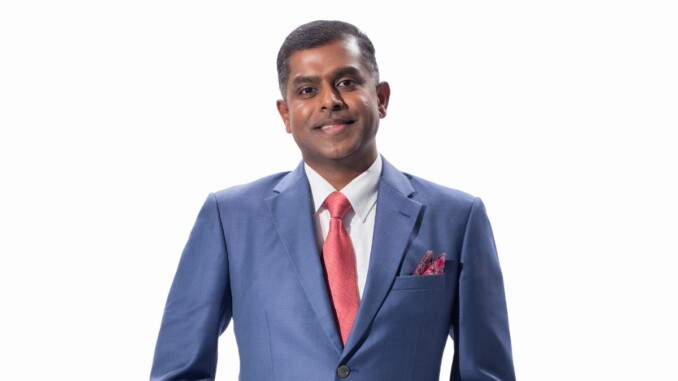
Finance and governance leader Dr Abdul Ahad Mohd Salleh (Dr. A. Ahad) is setting out a practical vision for stronger institutional trust, fiscal accountability and leadership discipline as Malaysia navigates a more complex economic and governance landscape.
With over 27 years of global experience across finance, management and strategic leadership, including his current role as Chief Financial Officer of a government-linked company, Dr A. Ahad believes Malaysia’s next phase of growth will depend not only on policy, investment and innovation, but also on the quality of governance systems that shape decision-making, accountability and public confidence.
“Governance is often discussed in terms of rules, reporting and compliance, but its real value goes much deeper. Strong governance builds trust, improves decision-making and creates the discipline needed for long-term resilience,” said Dr A. Ahad. “In today’s environment, organisations can no longer view governance as a box-ticking exercise. It must become part of how leaders think, decide and act.”
After more than two decades in industry, Dr A. Ahad pursued doctoral research to deepen his understanding of how governance practices influence organisational behaviour and long-term economic outcomes, reflecting his belief that practical experience and academic inquiry should work together in addressing real-world challenges.
Dr A. Ahad recently completed his Doctor of Philosophy in Accounting and Finance, specialising in Taxation, at Management & Science University. Using corporate tax avoidance as a lens to examine governance and accountability among Malaysian public listed companies from 2021 to 2023, the study analysed a final sample of 663 company-year observations. The research identified profitability, leverage and board size as key factors influencing corporate tax avoidance, and further observed that managerial ownership strengthened the relationship between certain governance mechanisms and tax avoidance, including those involving board size, women’s representation on boards and director remuneration.
Reflecting on these findings, Dr A. Ahad notes that the wider lesson is that governance is shaped not only by formal policies and board structures, but also by how closely leadership, ownership and accountability are aligned.
“These findings reinforce a simple but important point: strong governance is most effective when leadership, ownership and accountability are aligned. When companies make decisions with greater discipline and transparency, the impact extends beyond the organisation. It contributes to investor confidence, fiscal responsibility and public trust in the wider economy.”
Drawing on experience across multinational, regional and government-linked environments, Dr A. Ahad believes governance quality can materially influence organisational performance, stakeholder confidence and long-term sustainability.
His leadership approach is shaped by the belief that finance should no longer be treated only as a reporting function, but as a strategic discipline that supports better decisions, stronger governance and long-term value creation.
“Finance and accounting can no longer be viewed as back-office functions that only report what has already happened. At their best, they are part of an organisation’s trust architecture — shaping how decisions are tested, how resources are allocated, how risks are surfaced and how accountability is built into daily management,” said Dr A. Ahad.
For Malaysia, this matters because institutional confidence is not created by policy alone. It is built through the quality of decisions made inside organisations every day, from budgeting and tax governance to procurement, internal controls, performance measurement and long-term value creation. The finance profession must therefore evolve from being a record-keeper of the past to becoming a stronger guardian of responsible growth.
This perspective mirrors the broader national dialogue on the evolving accountancy profession. At the MIA International Accountants Conference 2026, themed ‘Future-Ready, Value-Driven, Trust-Centred,’ Finance Minister II Datuk Seri Amir Hamzah Azizan underscored the critical role of accounting professionals in driving governance, fiscal discipline, and nation-building. These priorities align directly with Dr. A. Ahad’s own commitment to shifting finance leadership beyond traditional reporting and toward the active cultivation of trust, accountability, and long-term value.
For Dr A. Ahad, this reinforces the need for stronger collaboration between industry, universities, professional bodies and public institutions to develop finance professionals who can contribute beyond traditional reporting.
This philosophy also underpins his support for the proposed Malaysian Management Accountants Association, envisioned as a collaborative platform to strengthen Malaysia’s management accounting ecosystem. The initiative seeks to elevate management accounting as a strategic discipline that supports governance, performance management, decision-making and long-term organisational value. Dr A. Ahad acknowledged the support of Management & Science University, his supervisors and the academic community in advancing research that connects academic inquiry with practical industry relevance. He hopes to continue contributing to national conversations on governance, taxation, strategic finance and institutional leadership, particularly in areas where academic insight can be translated into practical value for organisations, policymakers and the wider public.
