
From kepala to kelapa: The meaning behind coconut breaking in Indian culture
- 135Shares
- Facebook132
- Email1
- WhatsApp2
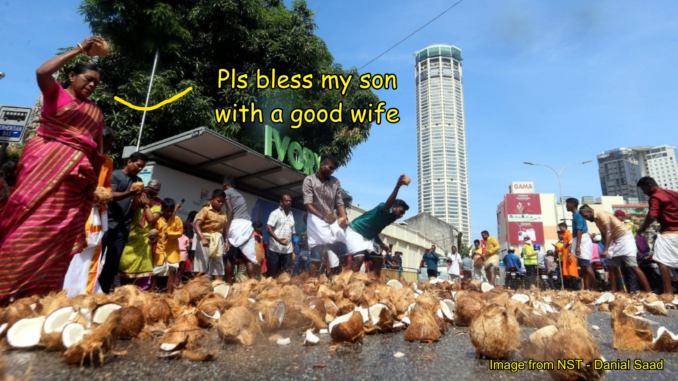
You’ve definitely seen it happen before, whether at a temple or right before someone drives off in their brand new Myvi. One second someone is just standing there, and suddenly, crack! A coconut meets the pavement at full force.
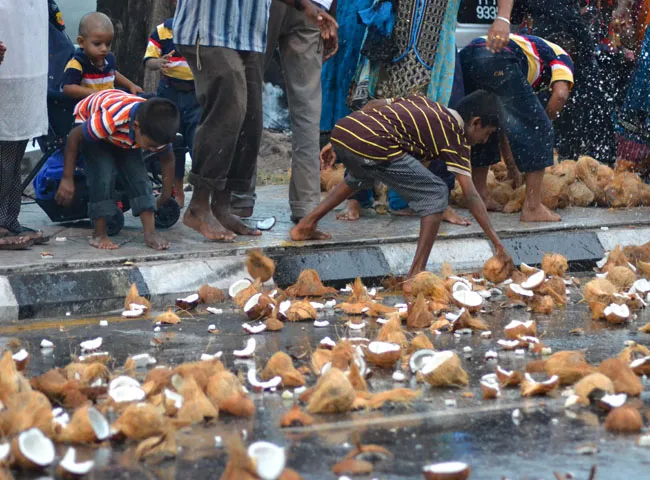
If you’re Indian, you know exactly what this is. If you’re not, you might be standing there thinking “Uhh… why did that person just assault a fruit?”
It might look random but in the Hindu community, this is a deeply respected ritual. Coconuts are often broken before major life events like weddings, exams or housewarmings. Heck, even Kamala Harris did it. Back in 2010, she had her aunt in India break a coconut for her before her big election, the one where she ran (and won!) as California’s Attorney General.
Clearly there’s more to this coconut business than meets the eye, but it had us wondering what is it about coconuts specifically? As a matter of fact, why not any other fruit that’s easier to throw? And now that we’re in the spirit of questioning things, how did this coconut breaking culture even start?
So without further ado, let’s crack this open.
Coconuts replaced… human and animal sacrifices?!
Yep, you read that right. If your jaw just dropped, better close it before a fly flies in 😶🌫️.
Back in the ancient Vedic days, Hindu offerings could get pretty intense. By intense, we mean animals, and in some rare cases, humans were sacrificed as offerings to the Gods. They were meant to show deep gratitude, since sacrifice (yagna or yajna) was considered the ultimate act of devotion.
The idea was simple: the more valuable the offering, the more serious your prayer looked to the Gods. Want rain? Good harvest? Better start prepping a goat (or worse 🤐).

But over time, philosophies like “ahimsa” (non-violence) became more central to Hinduism, and the search began for a less bloody way to ask for blessings.
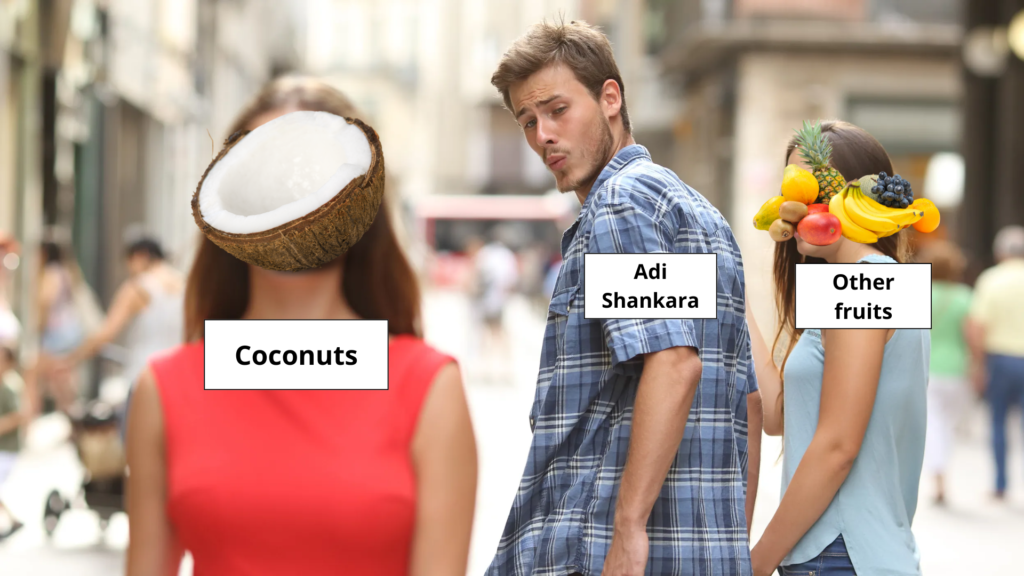
The guy to actually translate those thoughts into action was Adi Shankaracharya (aka Adi Shankara), an Indian Vedic scholar from Kerala. While on the lookout for a more peaceful alternative, he apparently stumbled upon a coconut and went, “Hmm. This looks like a human skull.” Don’t ask us how he saw the resemblance but somehow it worked, okay?
In his view, this round, hairy fruit checked all the boxes:
- A hard shell: human head
- White flesh: human body
- Water: blood, life, or soul
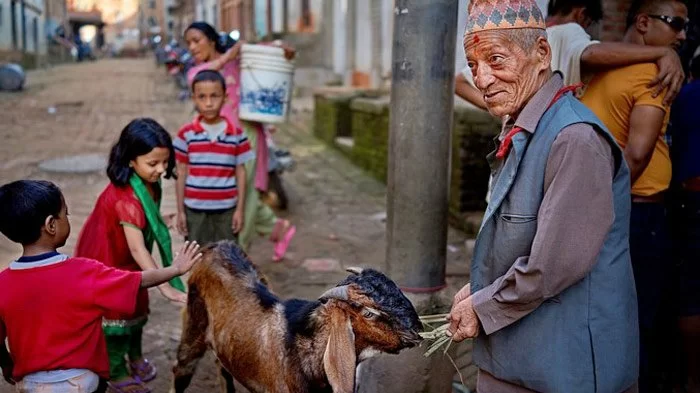
That said, not all Hindus have embraced the coconut with the same semangat membara. In places like Nepal, animal sacrifices are still very much a thing, especially during big festivals like Dashain and Gadhimai.
Still, you gotta wonder, takkan they got their holy upgrade just because they look like skulls, right? Surely, there are other things that make them superior to other fruits…
There’s a reason the coconut is called ‘God’s fruit’
If you grew up in an Indian family, you’ve probably had your fair share of greasy hair thanks to your mom or grandma’s obsession with minyak kelapa. Or maybe you’re still traumatized from writing karangan after karangan about the many uses of buah kelapa in school. All its 101 benefits aside, this lil ol’ fruit is also packed with meaning in Hinduism.
For starters, it actually represents the Tridev, which is the three main deities in the Hindu religion: Brahma (creator), Vishnu (preserver), and Shiva (destroyer).

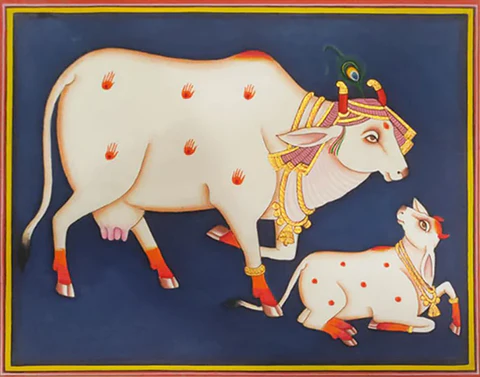
There’s this story where Lord Vishnu came down to Earth with three gifts for humanity. Rolling in all polite and respectful, he brought the Goddess Lakshmi for wealth, a magical wish fulfilling cow called Kamdhenu (yes, seriously) and a coconut tree.
People believe the coconut carries the essence of Lord Vishnu and Goddess Lakshmi, hence why it symbolises purity, fertility and the continuity of life. It’s also why they call it “sriphal” (God’s fruit) and use it to represent the Tridev.
Interestingly, even parts of the coconut mean something. The hard outer shell represents the human ego, i.e that tough, stubborn side that’s often in the way of spiritual growth. But once you crack it open, the white flesh inside symbolises peace, purity, and selflessness. That represents the real you, the sincere and humble part.
So you could say breaking the coconut is like letting go of your ego and offering your truest, cleanest self to the divine. But if you think that’s the whole story… we’ve barely even scratched the shell.
It attacc, it protecc, it get cracc for your success
While digging around, we may have stumbled on the OG coconut breaking story. According to the Ganesh Purana, Lord Ganesha once cracked open a coconut and offered it to Lord Shiva, basically asking for wisdom and a clear path ahead. And that’s kinda how coconuts ended up being a big deal in Ganesha worship.
Makes sense lah, since Ganesha is the go-to deity when you’re trying to remove obstacles and succeed in stuff. That’s why people break coconuts before big moments, whether it’s buying a car, starting a new job or praying for an A+ in that exam you didn’t study for.
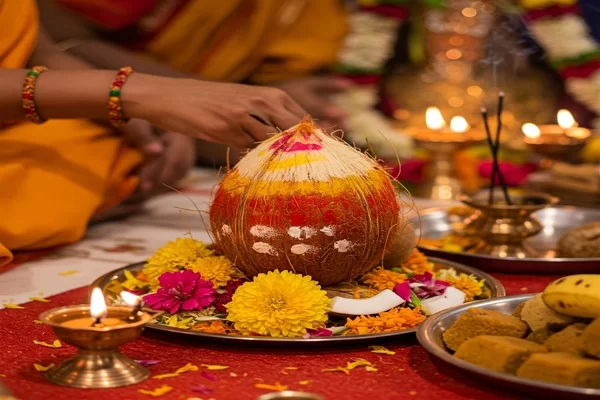
Generally for pujas or poojas, which are ceremonial worship rites, the coconut is decorated properly, usually with sandalwood paste, ash (vibhuti), kumkum (vermilion), and sometimes even a small flower garland. And tada! Your humble coconut is now the prettiest sacred offering. All this is done with intention and prayer, to purify the offering and show respect.

Then comes the smash. There’s actually a few ways to break it.
- Handheld smash/Smashing on the ground: Common during Thaipusam processions, devotees pick up coconuts and slam them onto the pavement with full force.
- Stone-base/Mallet smash: The coconut is placed on a stone surface and is hit with a mallet.
- Ritual invocation: A priest recites his prayers before breaking.
If the coconut doesn’t break cleanly, as in if it pecah sideways or doesn’t fully crack, then sorry ah, you gotta redo with a fresh one. A clean break means your offering is accepted nicely by the deity, so better not take any chances. In some temples, there’s even a designated spot for people to break the coconuts. If not there, then it’s usually just broken right by the entrance of the temple.
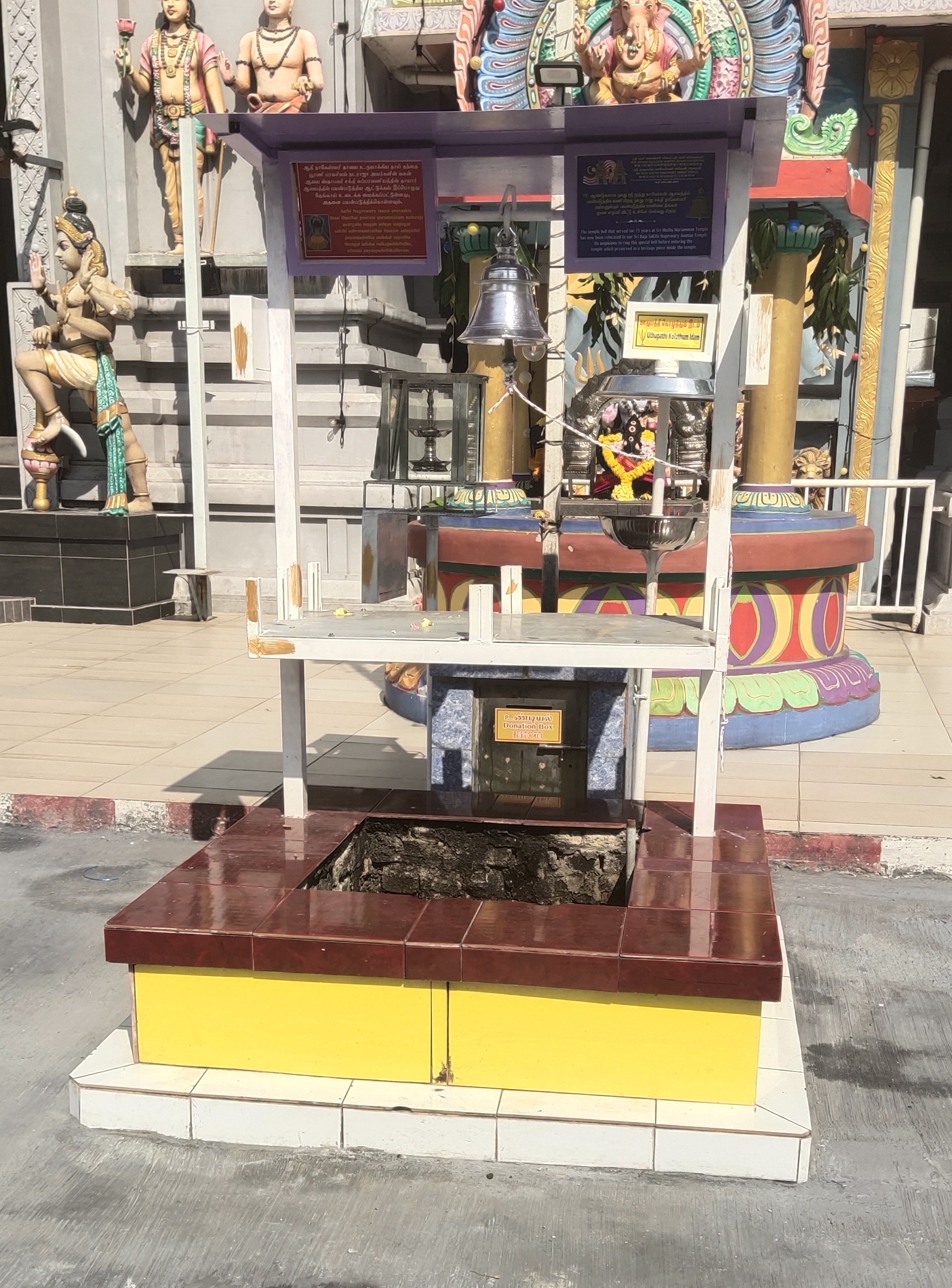
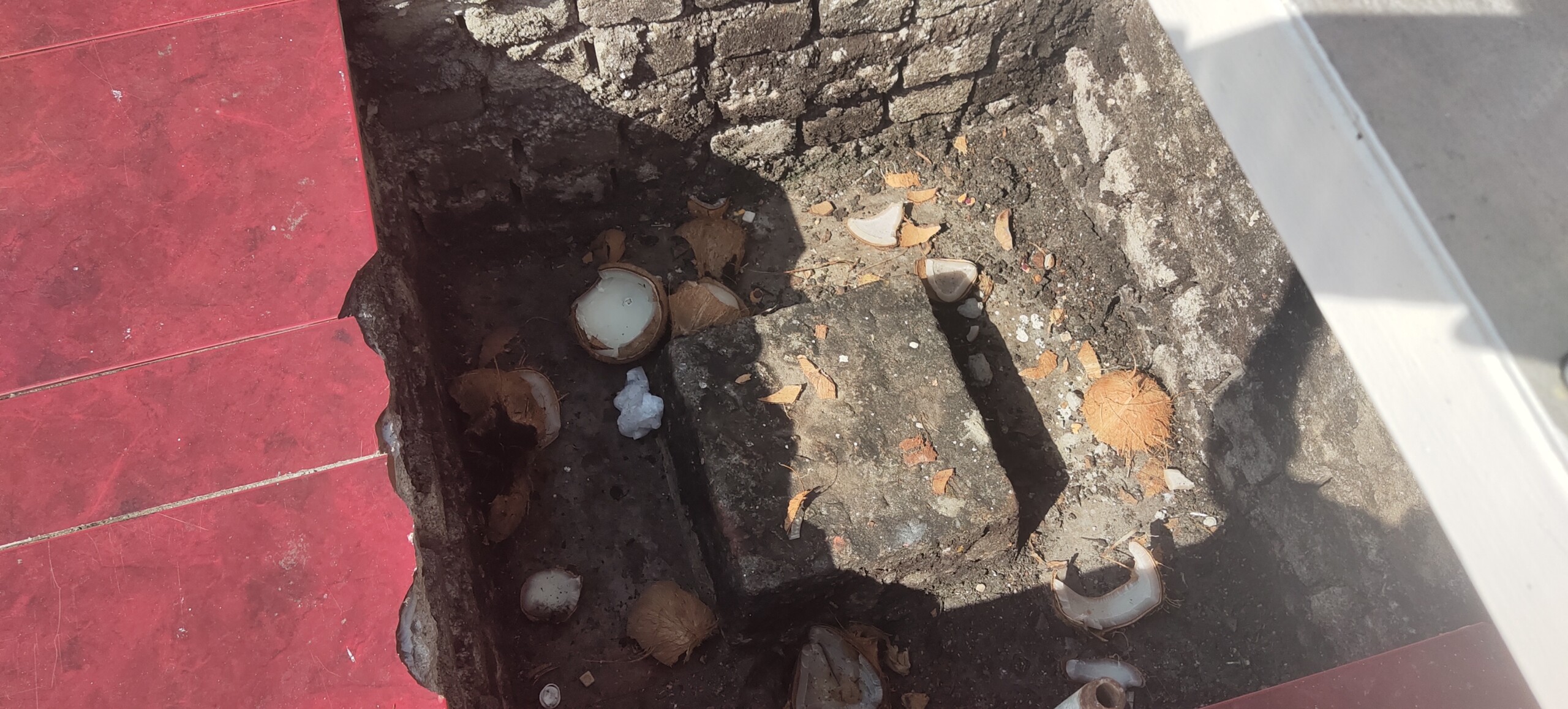
Now, what about the water inside? Well, coconut water is used like holy water and it’s sprinkled to bless people, spaces and even objects. The belief is that it can purify all that bad juju.
So, the coconut’s smashed edy and prickly bits have flown everywhere. What happens next?
The broken coconut pieces go to the lori sampah right? Right?
If you’re anything like this writer, you would’ve thought, “Oklah, prayers done. Can go home.”

Actually, the story doesn’t end there. In their press statement from 2023, the Consumers Association of Penang (CAP) said that after breaking, the coconut’s flesh and water should be treated like ‘prasadam’ (holy food). So, don’t just throw lah. You can eat it raw, cook with it or share with others. The whole act is supposed to be respectful, so you don’t just smash and dash.
Also, during big events like Thaipusam in Penang, after all the coconuts are cracked on the road, the mess is not left just like that. There will be clean up crews who sweep it up after. Since 2019, volunteers at Batu Caves have been collecting leftover coconuts and other fruits. Everything collected will be sent to a “Fruit Bank”.


It’s a collaboration with Persatuan Haiwan Terbiar Malaysia (SAFM), an animal welfare group that helps make sure all the smashed fruits get turned into food for animals instead of just going to waste. So even after the crack, the coconut still has its purpose. It’s spiritual, edible, and even helpful for hungry animals.
….Such main character energy 💅🏼

Oh, and CAP would like to remind everyone that one coconut is enough. There’s no such thing as cracking ten fruits for ten times the blessing 😩 Forreal though, it’s your sincerity that counts.
At the end of the day, coconuts will always be that fruit

What started as a sacred replacement for ancient sacrifices has now become a go-to ritual for everything, from weddings and exams to blessing your new house and even a new car. Over time, coconut breaking has shifted from purely holy temple ceremonies to something that fits into modern, everyday milestones.
The tradition might have evolved, but the meaning’s still there. It’s still about asking for blessings, clearing the path, and starting fresh. Whether you’re in a saree or jeans, whether it’s for a wedding or a launch, the coconut still does its job.
- 135Shares
- Facebook132
- Email1
- WhatsApp2