
Here’s how a housing law in Malaysia turned into a racial issue
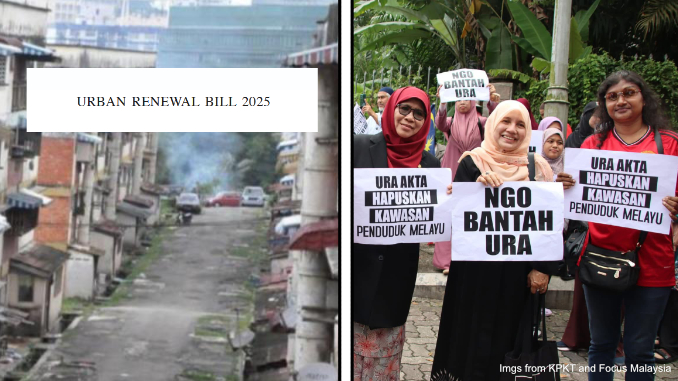
So sometime in August last year, the Urban Renewal Act (URA) was read in Parliament, and it essentially aims to make cities prettier.
A few months later in October, thousands of people rallied outside Sogo in KL to protest the bill. The rally, not the first one being held to protest the bill, was organized by Perikatan Nasional. Interestingly enough, the sentiment during the rally was something like if it passes, Malays will be like Palestinians getting their land seized by Israel.
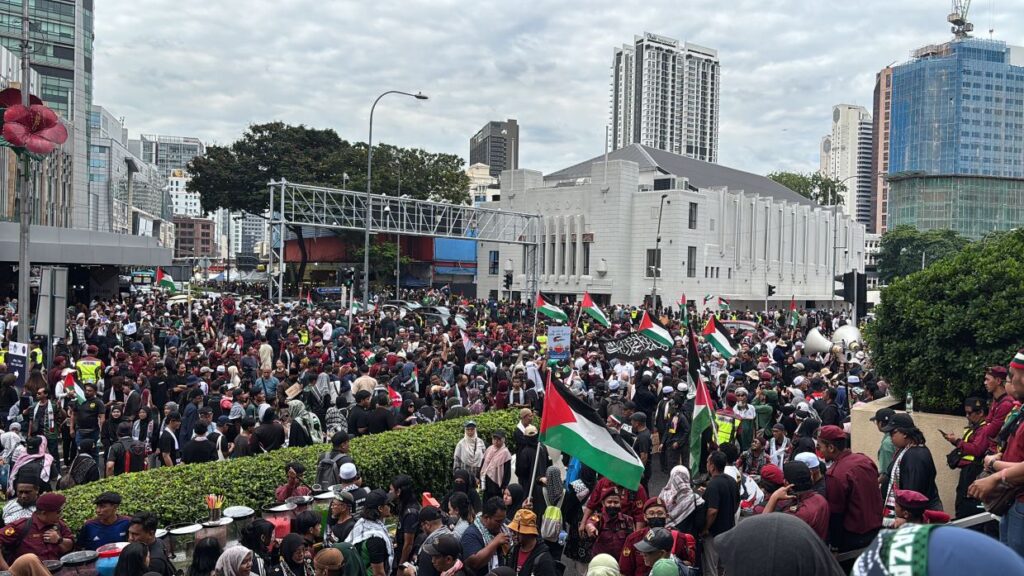
“If the URA is passed in Parliament, we will be ruled by the Developers’ Action Party. Nga Kor Ming will decide which land is taken and for which developer. We must learn from what the Palestinians have experienced – their land was stolen and seized. They (DAP) are not interested in development. They only want the land. When that day comes, the indigenous people will be evicted.”
– Takiyuddin Hassan, PN parliamentary chief Whip, as quoted by The Straits Times.
To be fair, this sounds like just another day in Malaysia, but there’s actually something interesting about how this issue got dialed up to 10 real quick.
To understand how it got so far right, so fast, CILISOS teamed up with INITIATE, The Fourth, Reform MY Media, and several other independent journalists to see how a seemingly docile suggestion can rile up so many people in such a short time. But first, if you haven’t been paying attention to the issue…
Here’s the logic behind why Urban Renewal Act = DAP Israel plotting to take Malay land
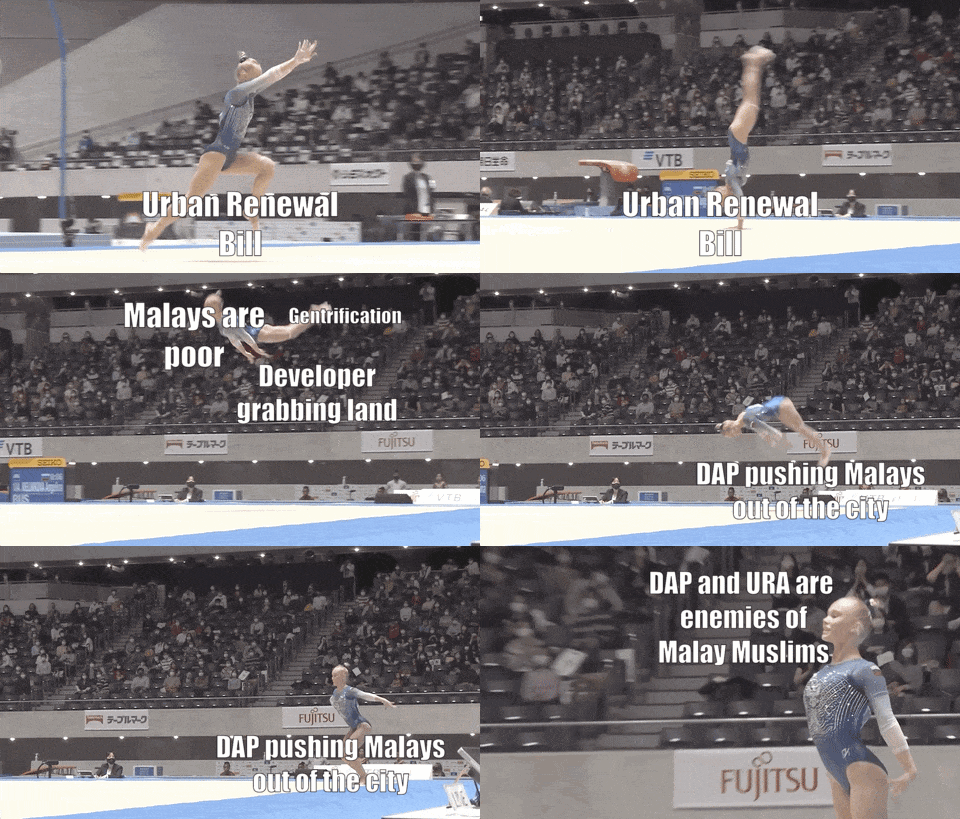
It might sound like some heavy mental gymnastics at first, but there’s actually an easy-to-follow thought process behind it.
First, the contents of the URA in question and the logic behind it. Basically, ugly ass old buildings are seen as an eyesore (and maybe hazards) in urban areas, so it’ll be nice if the government can sell it off to a developer to be redeveloped.
But currently, you would need every single owner of the building to agree before that can happen. Imagine trying to tear down an old, half abandoned condo, but before that you have to track down the owner of every single one of the 300 or so units and get them to agree.
If even one can’t be found or just won’t agree, nothing can be done. Even if everyone can be found and eventually agrees, it could take years (or even decades because haha gomen so inefficient) before they can start.
The URA aims to remedy this problem by disregarding a certain percentage of owners depending on the building’s conditions.
- if the building is still new (under 30 years), only 80% owners need to agree
- if the building is kinda old (over 30 years), only 75% owners need to agree
- if the building is abandoned or damaged, only 51% owners need to agree
We used disregard before because that’s one of the main anxieties when it comes to the URA. Using the condo example from earlier, let’s say it’s your late dad’s condo and it’s been around for 40 years. Using the 75% rule, only 225 out of the 300 owners would need to agree to redevelopment for you to lose your dad’s house. The other 75 owners can hoot and holler all they want, but it doesn’t matter since it’s the law.
So that’s one anxiety. Another anxiety is that you know how developers just love making high-end places that only expats and TV3 drama characters can afford. Imagine your condo got torn down and a new one came up in its place with some pretentious name like D’Boughanvilliea Perdonna or something. Now the neighborhood is too upscale for the good, hardworking, blue-collar Malaysians, and the kopi O there confirm will now be RM16 per eco-friendly cup. Now imagine it happening all over Klang Valley.
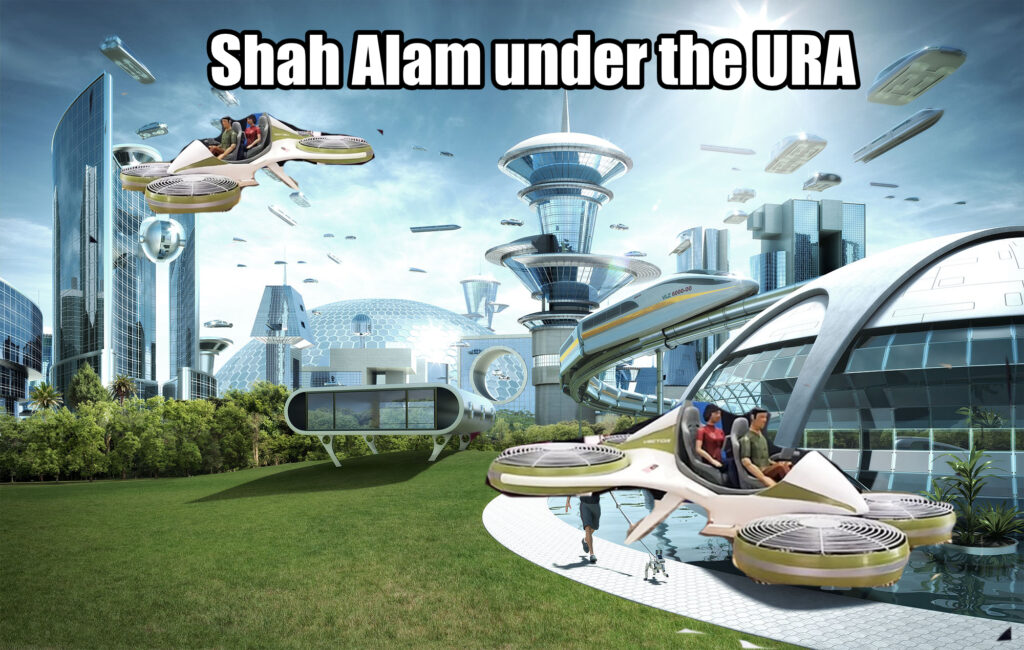
So put these two anxieties together, and it will seem like the proposed law is just an indirect way to get the stereotypically poorer races, like the Malays and the Indians, to get out of the city and make room for some other third race which is stereotypically rich. Of course, it didn’t help that the minister associated with the bill is Chinese and from DAP, making the narrative write itself.
Anyways, that’s the quick version of how the bill got turned into a racial issue. While it’s not quite a handspring double vault on a parallel beam, there’s still some mental gymnastics involved though, so you might be wondering…
How did the narrative change so fast?
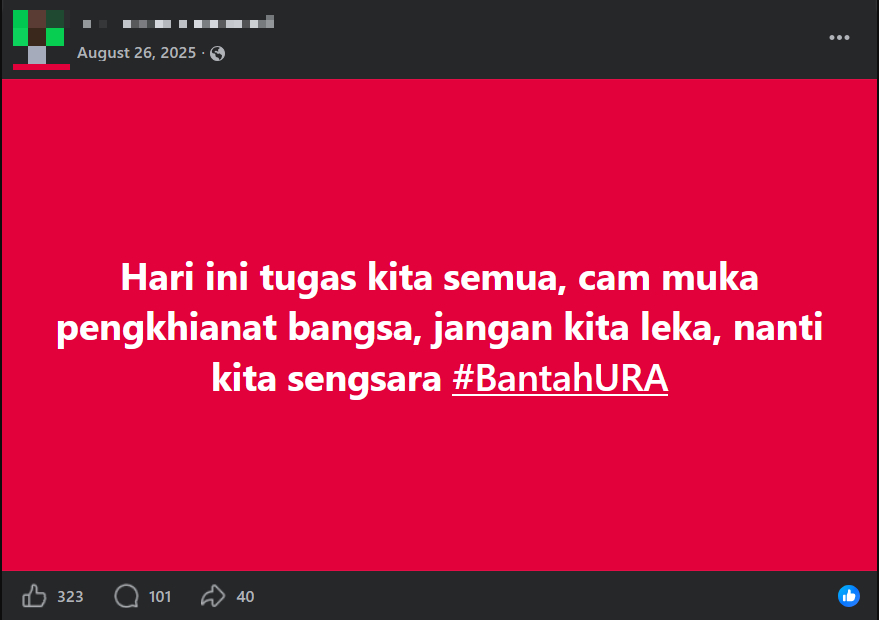
There’s a chance it was amplified on social media artificially. For this research, the team looked at a bunch of social media posts on Facebook and Threads carrying hashtags like #BantahURA and #TolakURA among other things to see if there’s anything weird about them. On Facebook, we managed to scrape up 816 such posts, while on Threads we got more than double that at 1,386 posts.
Basically, one of the things we looked at was the ratio of shares to engagement. Normally, people would comment more on a post, so posts with very little comments but a lot of shares could mean that it’s part of a coordinated sharing network. Think of it like your friend asking you to share a video of his kid’s school Merdeka presentation, and you share without watching. It’s artificial amplification, and for this study we’re looking at posts with at least a 5:1 ratio of shares to comments.
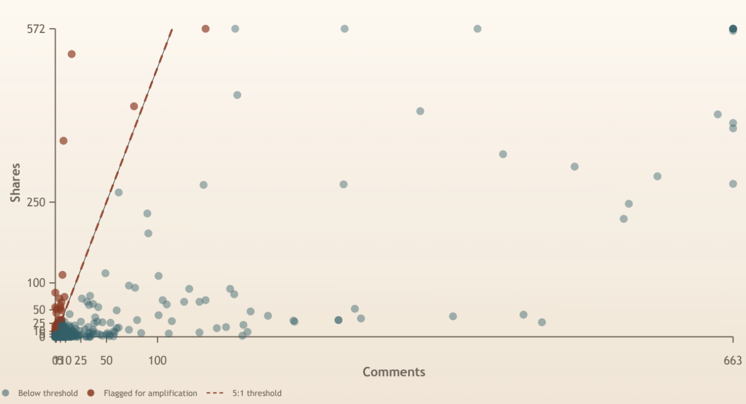
So what did we find? Well, on Facebook, around 5.4% or 44 posts have this high ratio, with half of them having more than 20 shares but less than 2 comments. So while the number of potentially artificially amplified posts are not that common, it’s there.
It’s a little different on Threads. On Facebook, the trend is for a small cluster of accounts with large followings – think pages – to drive the coordinated broadcasting. On Threads, where pages aren’t a thing, there are a lot of posts with high engagement that seem to come from real people with real opinions. But there are still suspicious activity here. 24 posts or roughly 2% were identified to have way more reposts than replies.
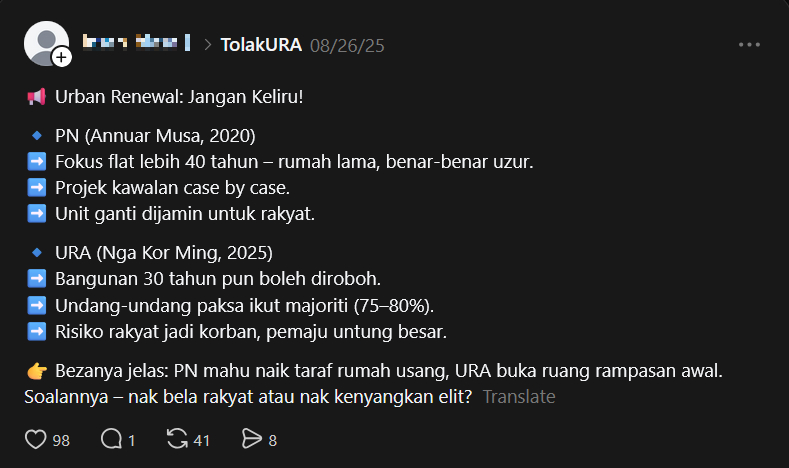
So were some people trying to make fetch happen? While the number is very low, less than 6% on Facebook and less than 2% on Threads, it can’t be denied that some funny business did happen. However, in the case of #BantahURA, possible coordinated sharing and artificial amplification was only a small part of a worrying trend…
By riding on existing issues, the far right message got amplified
So imagine you hate those Ghibli style AI pictures and you want more people to feel the same. Just outright saying that they’re ugly won’t be very effective, but if you attach your issue to things that people are already concerned about, like how AI is making global warming worse or how it’s destroying the creative community by stealing from artists like Miyazaki, then more people can get on board with it.
The same thing happened with the whole #BantahURA thing. We noticed that posts about the issue usually come in seven flavors or themes, and they are:
- Calling for people to join events and protests
- Property rights being threatened and developers benefiting
- How it’s a threat to Malays and Bumiputeras
- Making certain political parties or figures the enemy
- Framing the protests as a religious or unity among Muslims thing
- Associating it with other ongoing issues and movements
- Basically just people bickering with other people
With the help of AI and human reviewers, a portion of posts from both Threads and Facebook that strongly show one or more of these themes were analyzed to see which themes often show up together, which gives us this complicated-looking chart.
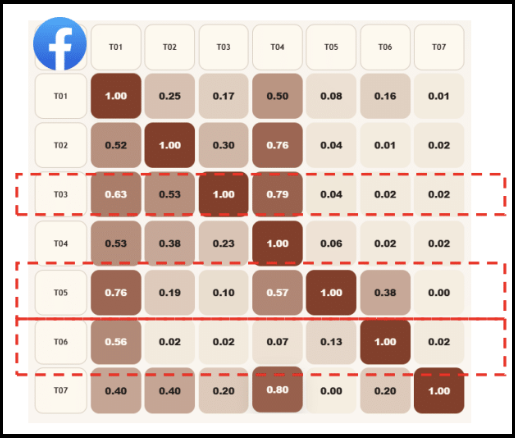
Offhand, the most common pairing on Facebook seems to be 4 and 3, as 79% of the posts that frame a political party or figure as an enemy includes threats to the Malays and Bumiputera as well. Other common pairings are attaching enemies to property right concerns (shows up together 76% of the time) and framing calls to protests and events as a religious unity thing (also 76% of the time).
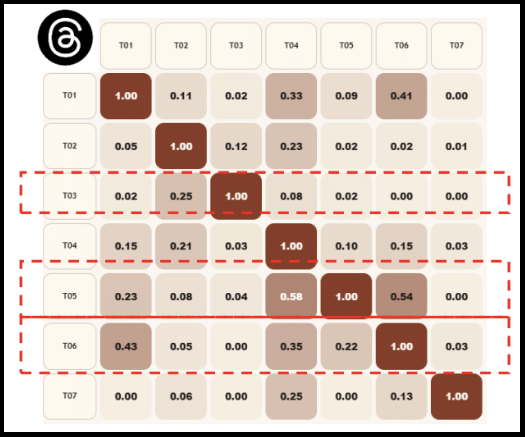
While themes do show up together in Threads, they’re not as common as on Facebook. The strongest pairing on Threads seem to religion and political enemies: 58% of the time, these themes show up together. Another common pairing is religion and pulling in another issue, like the Gazan conflict or Trump’s visit to Malaysia, showing up 53.8% of the time.
So far right narratives were indeed attached into other sentiments and topics, and if you’ve read this far…
That’s the answer to how a dull topic gained so much flavor and popularity
If we were to identify which themes are far right, it’s probably the threats to Bumiputera and the framing of the protests as a religious unity thing. These themes were found to intertwine with other themes, which kind of piggybacks on other issues to be heard.
The housing concerns brought about by the URA is valid by itself, but it got gained a new, irresistible flavor by framing it as a threat to Bumiputeras and Malays and naming enemies responsible for that threat. Going to protest the URA is not exactly far right, but by framing it as a religious responsibility and attaching ongoing issues like the conflict in Gaza to it, the protest gained a bigger meaning.
The thing is, this isn’t really a new thing in Malaysia. A lot of far right issues, especially when politics are involved, probably follow the same playbook. We just happen to put this particular one under the microscope.
So now that you more or less know how a seemingly boring housing law got turned into a racial issue, keep your eyes open for this pattern in the future, because it will probably happen again.