
Who’s destroying all these hills around Ipoh?!!
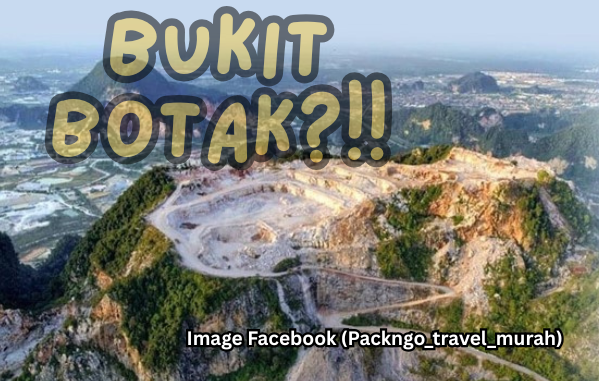
In conjunction with the Hari Raya season, we wanted to talk about something you might have noticed on your balik kampung drive.
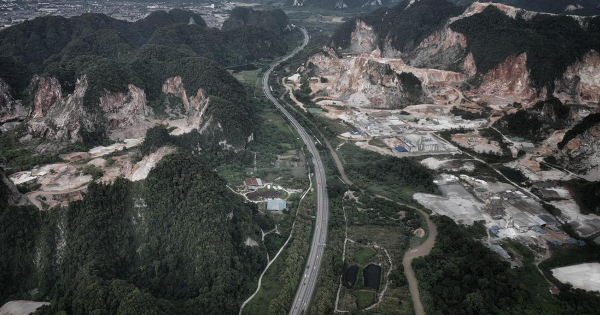
So, imagine if instead of a peaceful scenic view, what you see is somewhat opposite than that when the hills just look like… skinless pieces of KFC.
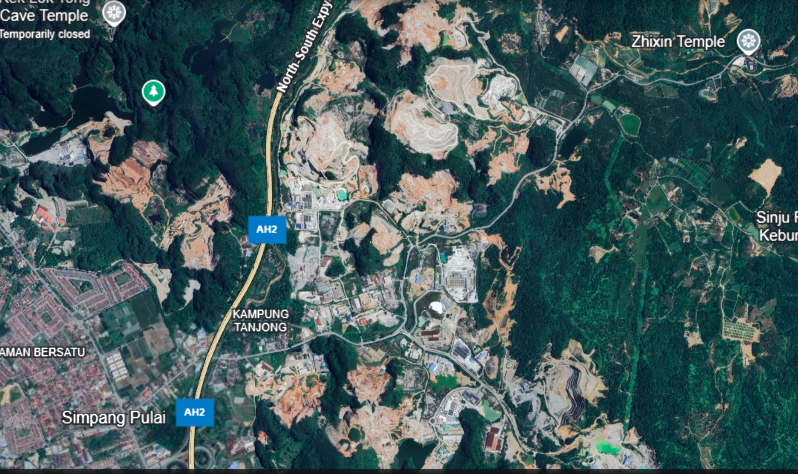
It’s not a new thing btw, you could see the comparison of the hills picture over the years on Google Earth from the early 2000s to 2015, to the most recent year of 2025.
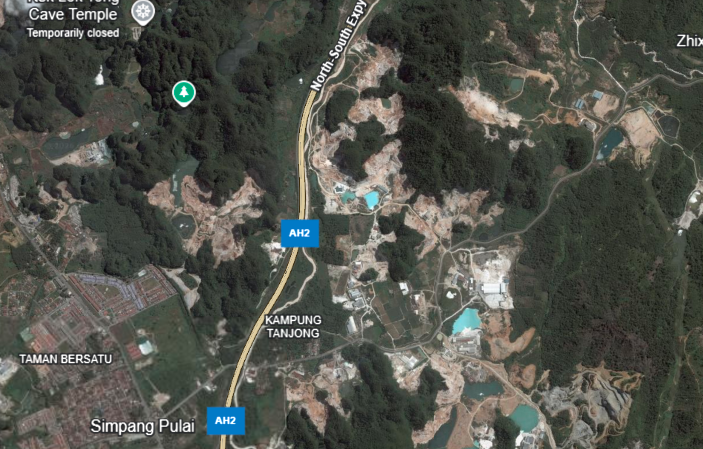
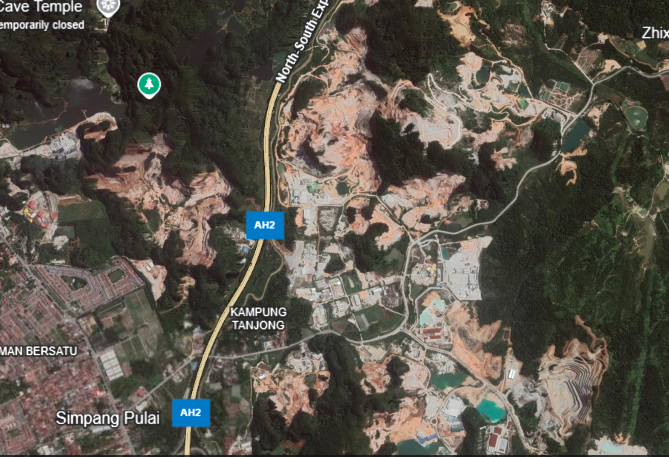
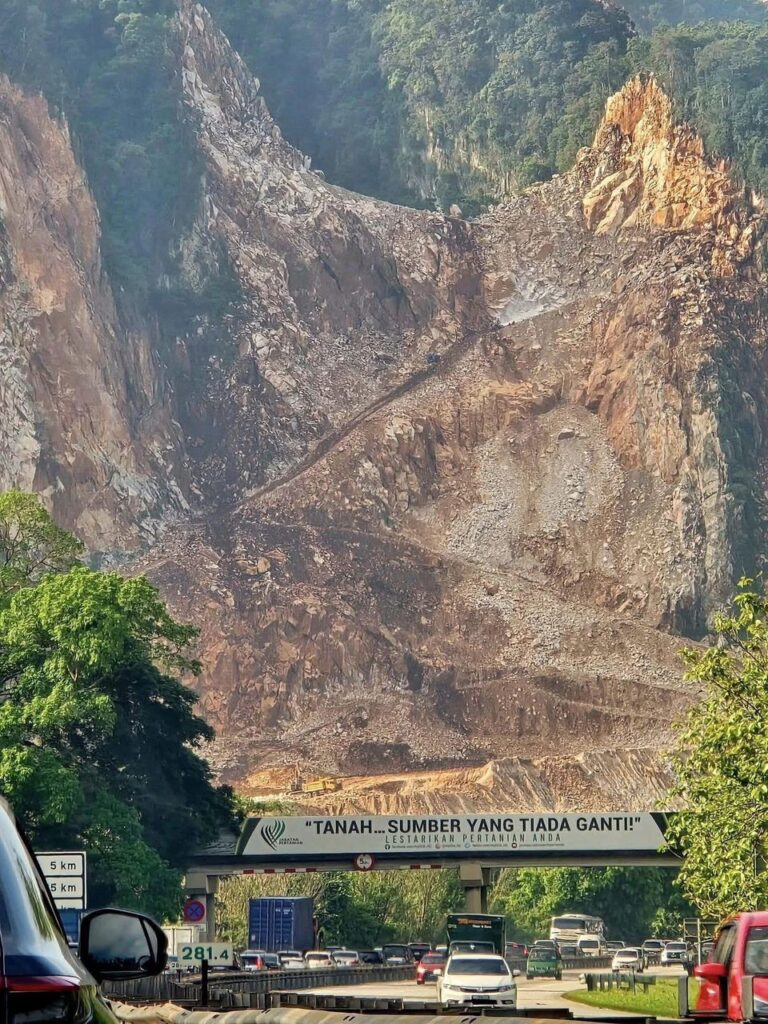
The funny thing is, there was once a signboard put up by the Department of Agriculture saying “Tanah sumber yang tiada ganti” in the ironic full view of one of the destroyed hills. They took it off after getting roasted and cooked by Malaysians.
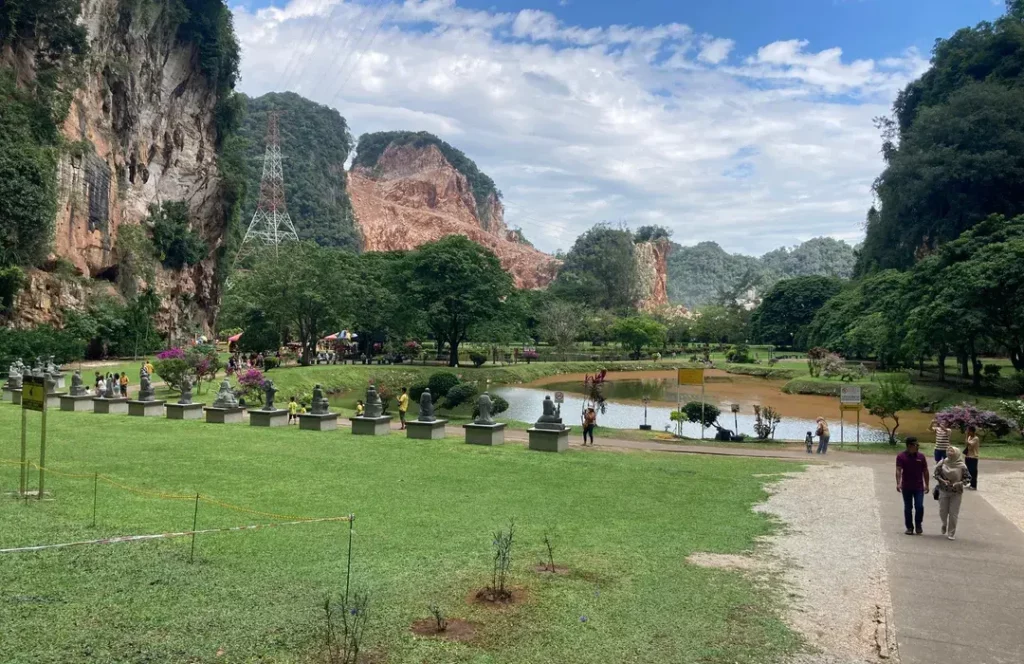
Of course we would want to hear from the locals, so we went to Ipoh and spoke to them. One of the guys said that he was struck by the view of half ruined mountains behind Kek Look Tong when it’s supposed to be a scenic panoramic view.
So, we came up to think of this question: Who’s behind all of the destruction of these limestone hills, is it really worth it for Perak, and see if there’s anything that could be done about it. Starting with question number one:
Who’s behind all of these quarrying?
It’s not entirely top secret, cause you could easily search it up on Google Maps and see which company owns which quarries.
So what they do is they extract limestones from these hills which gets turned into cement and used in all types of construction of buildings, or the marble and granite for your kitchen countertops. Not to mention, even in your everyday items like toothpaste, paper and paint for example.


If you wanna blame these companies based on Google Maps… Hold on, you can’t really, cause most of them are legal. This isn’t some secret midnight operation with shady villains blowing up rocks and running away.
These are licensed companies. They submit proposals. They apply for permits, they even conduct Environmental Impact Assessments (EIA). Their reports go through the Department of Environment, the Land and Mines Department, the Mineral and Geoscience Department, and other agencies. Some projects are even opened up for public feedback.
If approved, they get a quarrying license from the state government. Means there is already a system in place.
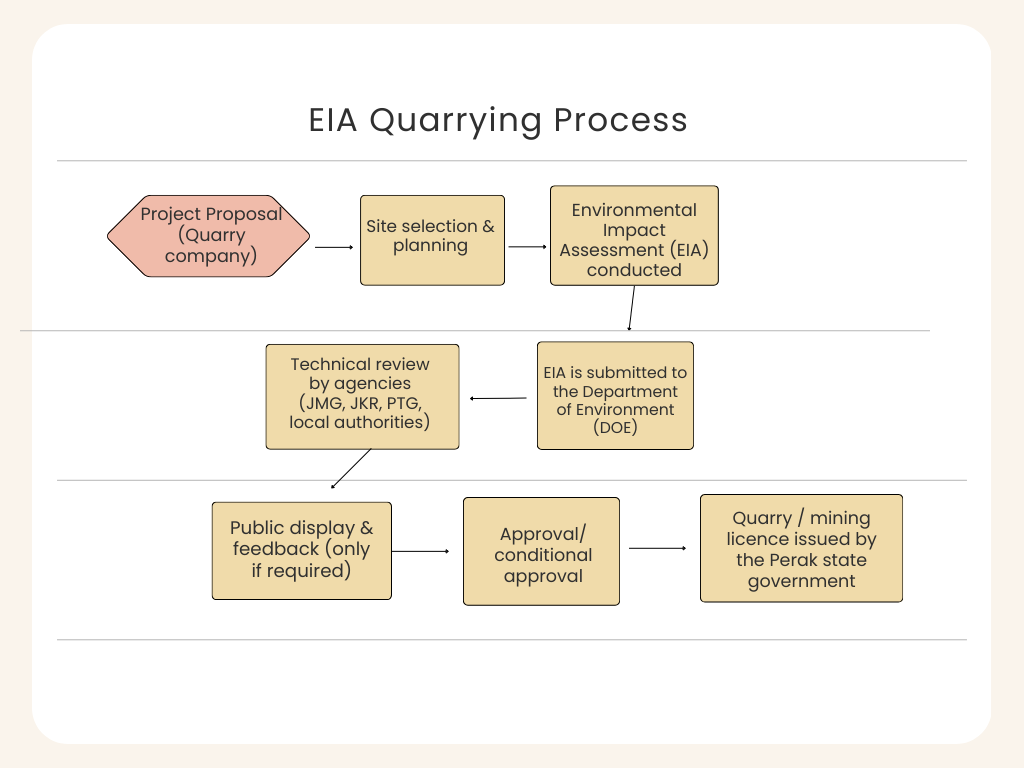
So the question isn’t really who is doing it. The question is whether this system is making the right trade-offs.
What’s the Real Cost?
When a limestone hill gets quarried, the damage isn’ t just for the eyes. More importantly, these hills are biodiversity hotspots.
According to Dr Lim Teck-Wyn, an environmental science lecturer at the University of Nottingham Malaysia, many species found in these limestone ecosystems evolved independently over millions of years. And some exist NOWHERE ELSE on Earth.
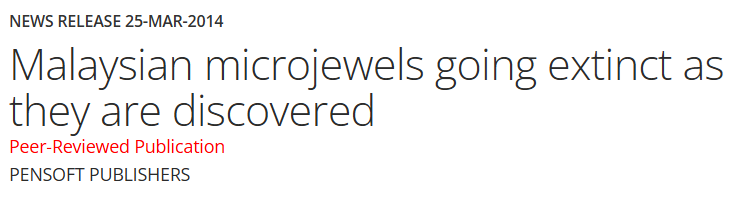
Take the micro-jewel snail, for example. These tiny snails live solely on limestone hills in Malaysia, Sumatra and Thailand. Some species are so rare that they exist on just a single hill.
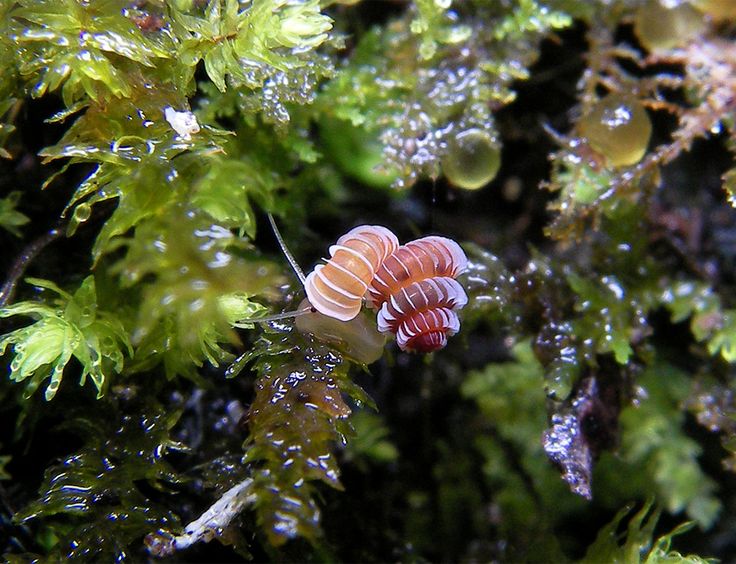
Now imagine that hill getting blasted into cement.
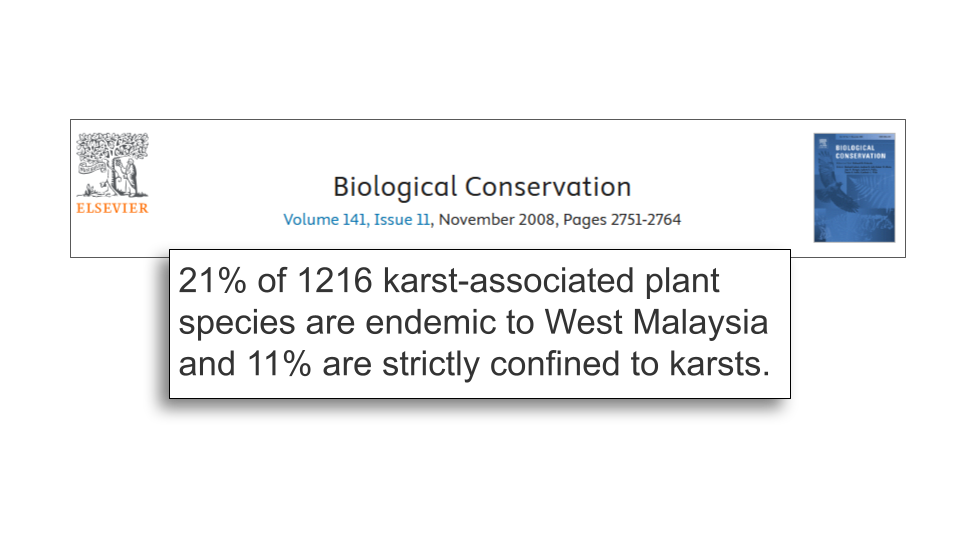
And it’s not just snails. One study found that out of over 1,200 plant species growing in limestone environments, 21% are endemic to Peninsular Malaysia, and another 11% are strictly confined to limestone habitats.
Once the hill is gone, they’re gone. On paper, Malaysia has signed multiple international biodiversity agreements. But in practice? Biodiversity protection often takes a backseat, especially when money is tight.
Some states like Sabah, Sarawak and Pahang have biodiversity councils. Perak doesn’t. And biodiversity isn’t even listed as a core objective of the Department of Environment. That’s why EIAs often focus heavily on noise, dust and traffic but rarely on permanent species extinction.
It’s Not Just About Wildlife
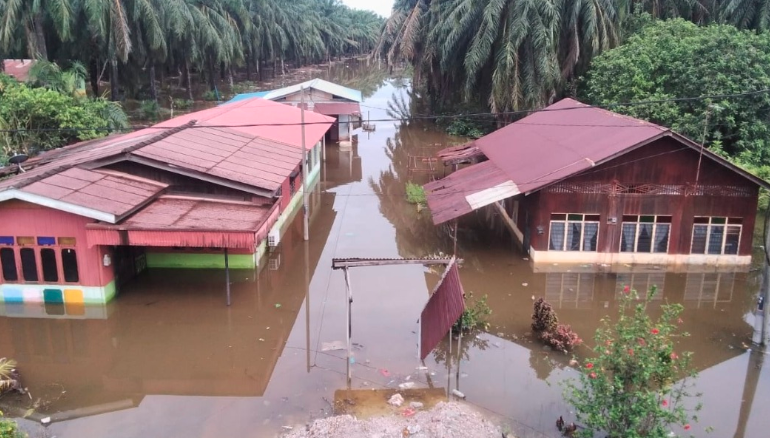
Environmental groups like Sahabat Alam Malaysia have also pointed out that unchecked quarrying contributes to erosion and flash floods.
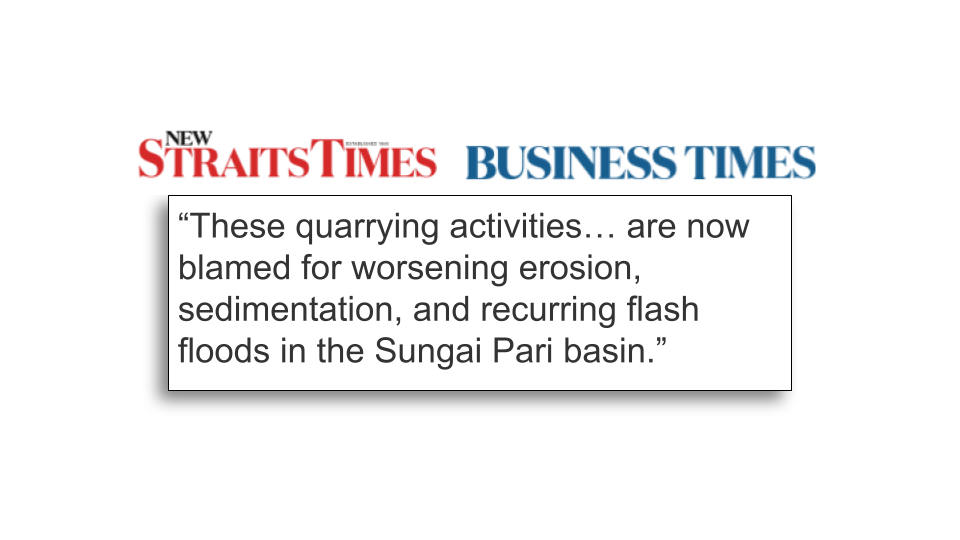
Limestone formations play a role in how water moves underground. When hills are reshaped, the natural drainage systems are disrupted. Water flows faster. Pressure builds. Flood risks increase.
And if you look at Malaysia’s flood history 1971, 2006, 2007, 2010, 2014, 2017, and the devastating 2021 floods, it’s fair to ask whether landscape changes are part of the story.
But Here’s Where It Gets Complicated
Quarrying isn’t purely evil. Even Dr Teck-Wyn himself has said he’s not entirely against quarrying, as long as it’s controlled. The same goes for Dr. Jeyakumar Devaraj, chairperson of Parti Sosialis Malaysia. The argument isn’t “ban quarrying overnight.” The argument is consistency and responsibility.
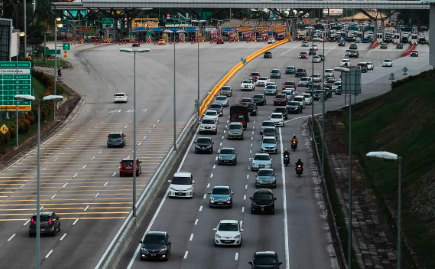
Because the reality is: Malaysia builds. Constantly. Homes. Highways. Rail lines. Industrial parks. As a developing country, we need cement. Quarrying extracts high economic value from relatively small land areas compared to something like logging, which destroys huge forest tracts.
Then there’s the money. 🤑
Malaysia’s federal budget is close to RM420 billion. Perak’s state budget? Around RM1.6 billion.

States are expected to generate their own income. Quarrying becomes hard to say no to.
So Is It At Least Worth the Money?
In 2024, Perak reportedly made about RM129 million from quarrying activities, covering everything from limestone to rare earths. But here’s the problem: there’s no clear public breakdown of how much specifically comes from limestone.
The only detailed figure publicly available comes from a 2021 report prepared for GCCP Resources (Malaysia’s largest crushed limestone producer listed in Singapore). According to that document, limestone royalties paid to the state were around RM2.90 per tonne, with export duties at RM5.10 per tonne.
That’s a flat rate.
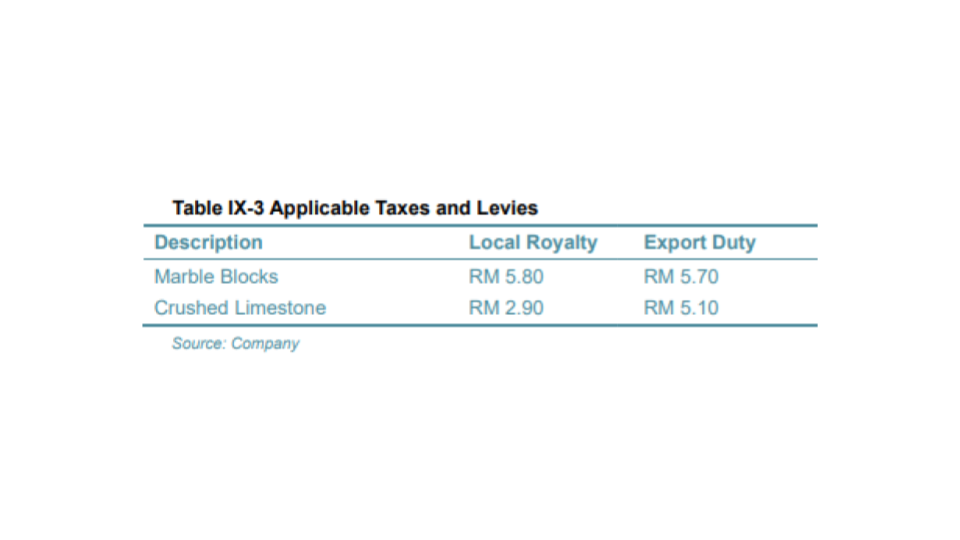
Compare that to countries like China, the Philippines or Myanmar, where royalties are often tied to a percentage of market value. When prices go up, their royalties go up too.

So is Perak underpricing their hills? We honestly don’t know. And that’s kind of the problem. At the scale and speed Ipoh’s limestone hills are disappearing, why are these numbers so hard to find???
So What Can Be Done?
So… The experts we spoke to aren’t calling for an immediate shutdown of all quarrying. They’re calling for transparency. To at least know who approves these projects, how much revenue actually goes back to the state? Or should local communities have a stronger say before a hill near their home is permanently destroyed?
Interestingly, international quarrying companies often operate under stricter global reporting standards especially regarding biodiversity. If it can be done elsewhere else, why not here?
So… Who’s Destroying Ipoh’s Limestone Hills?
If we had to make a list, it might include something like corporations that don’t fully adhere to international environmental standards, a federal system that doesn’t prioritise biodiversity strongly enough, state governments selling limestone at rates that may not reflect its true value.
If you’re heading back to Ipoh this festive season, look at the hills. Talk about it. Post about it. Ask your MPs and ADUNs for clearer answers on approvals and revenue.
At the very least, we deserve transparency about how “tanah sumber yang tak boleh diganti” is being replaced with cement.
And if we’re going to lose mountains, the least we can ask is: was it actually worth it?
