Just what the heck started the fight between Thailand and Cambodia?
- 58Shares
- Facebook56
- LinkedIn1
- WhatsApp1
Most of you are likely aware by now of the fight between Thailand and Cambodia at the border. On the 24th of July, things kicked off when a rocket – allegedly fired from the Cambodian side – landed inside Thai territory. Some reports even say it hit areas close to civilian homes.
Thailand obviously wasn’t having it and that same day, the Royal Thai Air Force responded by sending in F-16 jets to bomb Cambodian military positions. According to them, the strike successfully weakened Cambodia’s forces.
As expected, both sides insisted the other started it and no one owned up to firing the first shot.
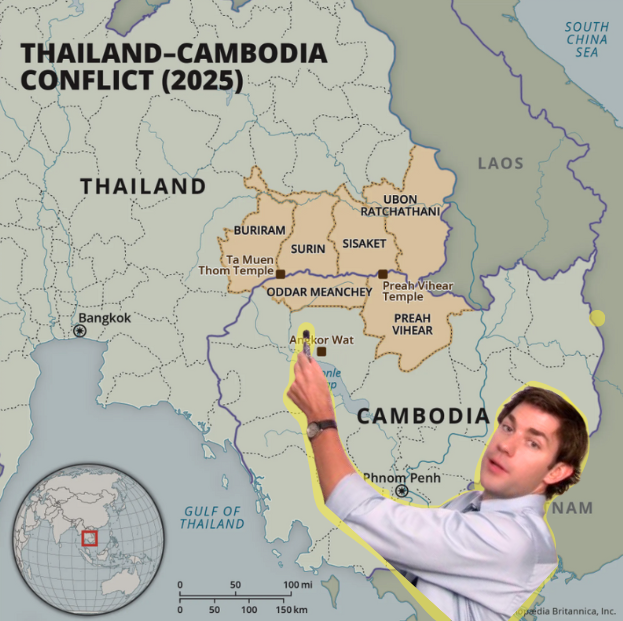
If this feels like déjà vu, that’s because it is. From 2008 to 2011, Thailand and Cambodia had multiple flare-ups over the border. And just a couple of months ago in May, there was a shootout near the Preah Vihear temple that reportedly left one Cambodian soldier dead.
But here’s the thing most people don’t realise…
The whole thing kinda started because of the French 🙃
To really understand why this border has always been one giant headache, we gotta rewind the clock a bit.

So back in the 1800s, mainland Southeast Asia was basically a giant tug of war between two regional powers – Siam (now Thailand) and Vietnam. Siam was busy expanding its influence, turning smaller kingdoms like Laos and Cambodia into its vassal states.
At the same time, Western colonial powers were slowly creeping into the region. While we in Malaysia had the British and the Dutch, mainland SEA had the French. They started by colonising Vietnam, then slowly moved westward until they established what’s known as French Indochina.
And that’s where things get messy.
Cambodia’s King Norodom saw a chance to cabut from Siam’s paws. So he turned to the French and struck a deal and by 1863, Cambodia became a French protectorate under French Indochina.

So why didn’t Siam do anything?
Well, they had their hands full. The British were breathing down their neck from Burma, they were trying to hold on to the northern Malay states and the French were slowly eating into their territory. To avoid being fully colonised, Siam signed the Franco-Siamese Treaty of 1907, where they agreed to cede the provinces of Battambang, Siem Reap, and the area around the Preah Vihear temple to Cambodia.
Those territories stayed part of French Indochina and while the treaty may have been just a couple of lines on paper, it’s in fact the seed of all the drama we’re still seeing today.
Thailand wanted their land back based on history
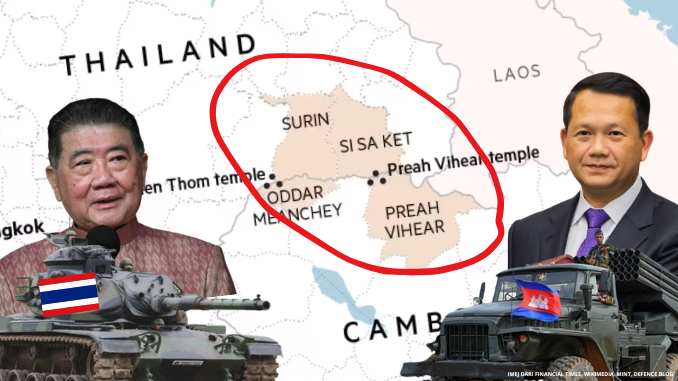
After Cambodia got independence in 1953, the border drama really started heating up especially around the Preah Vihear Temple, which sits dramatically on a cliff right at the edge of the two countries. Thailand claimed it was theirs, since Cambodia used to be under Siam. Cambodia ofc pointed to the 1907 treaty and swept those claims aside.
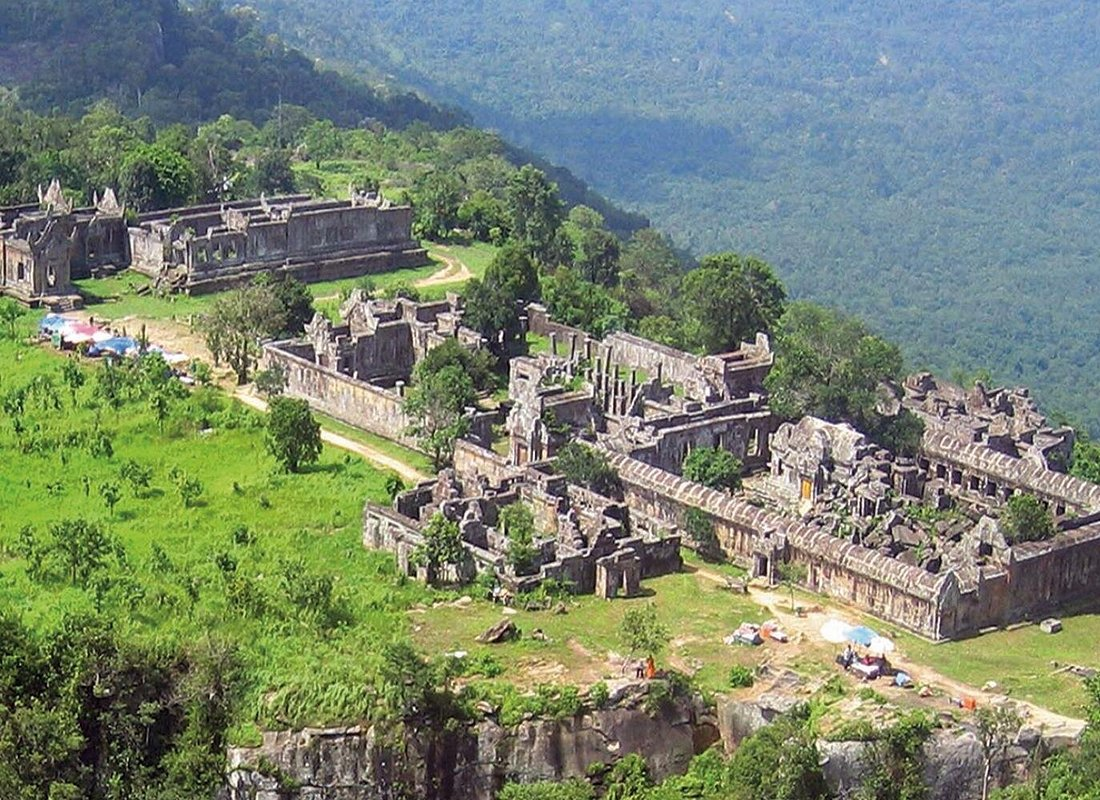
To settle it once and for all, Cambodia took the case to the International Court of Justice (ICJ). Lo and behold, the court said the temple belonged to Cambodia. But the ruling didn’t mention the surrounding land like Phnom Trap Hill (or Phu Makua). So both countries terus clung to their claims and the entire situation stayed ambiguous enough to keep the tension simmering.
Then in 2008, Cambodia got the temple listed as a UNESCO World Heritage Site. And that’s basically when all hell broke loose. Between 2008 and 2011, full-on skirmishes broke out involving rockets, mortars, gunfire, the whole nine yards. At least 13 soldiers and a few civilians died, and nearby residents had to pack up and flee.
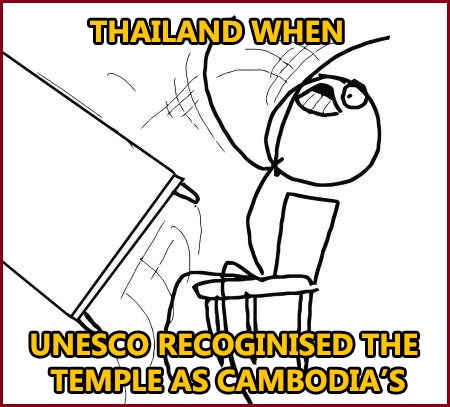
Even after the ICJ stepped in again in 2013 to clarify (and once more sided with Cambodia), the beef never really cooled down.
The conflict flared up again and Malaysia tried to play peacemaker
By May this year, a deadly shootout at one of the disputed spots tipped things over. A Cambodian soldier was killed, both sides rushed reinforcements to the border and sleepy nearby villages suddenly turned into danger zones. Once more, hundreds of residents packed up and fled.
@worldarmynavy ล่าสุดทหารกัมพูชาลงคลิปเพิ่มอีก! เห็นได้ชัดว่า ทหารกัมพูชาใช้ถนนสัญจรของชาวบ้านในจังหวัดอุดรมีชัยเป็นตำแหน่งเปิดฉาก ระดมยิงระบบจรวดหลายลำกล้อง BM-21 Grad 122 mm. โจมตีอำเภอปราสาท จังหวัดสุรินทร์ของประเทศไทย เมื่อวันที่ 27 กรกฏาคมที่ผ่านมา อย่างไรก็ตาม เหตุการณ์นี้ บ้านเรือนประชาชนและคอกวัวในอำเภอปราสาท จังหวัดสุรินทร์ ถูกทำลายด้วยจรวด BM-21
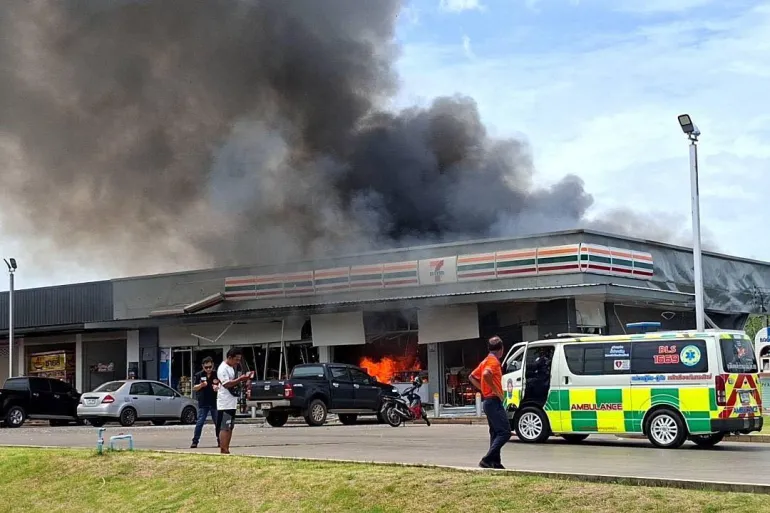
Then on 24th July, things really exploded. According to Thailand, a Cambodian drone had entered their airspace. Not long after, a group of six Cambodian soldiers allegedly crossed the border and attacked a Thai military post, followed by BM-21 rocket strikes aimed at civilian areas in Thailand.
Thailand hit back with full force, launching ground and air strikes using fighter jets and tanks. In just one week, at least 43 people were dead and more than 300,000 displaced.
Since Malaysia is the ASEAN chair this year, it obviously wouldn’t look good for our country or our PM to just sit back while our neighbours went to war.

So Anwar got on the phone with Thai PM Phumtham Wechayachai and Cambodian PM Hun Manet to get both leaders to sit down and talk things out. The negotiations happened in Putrajaya and interestingly, even reps from the US and China (Cambodia’s key ally) were there to observe.
Last-last, Thailand and Cambodia agreed to an unconditional ceasefire. They promised to pull troops out of the hot zones and even set up a new ASEAN Border Monitoring Committee with Malaysia playing the token guru besar.
But the peace didn’t last.
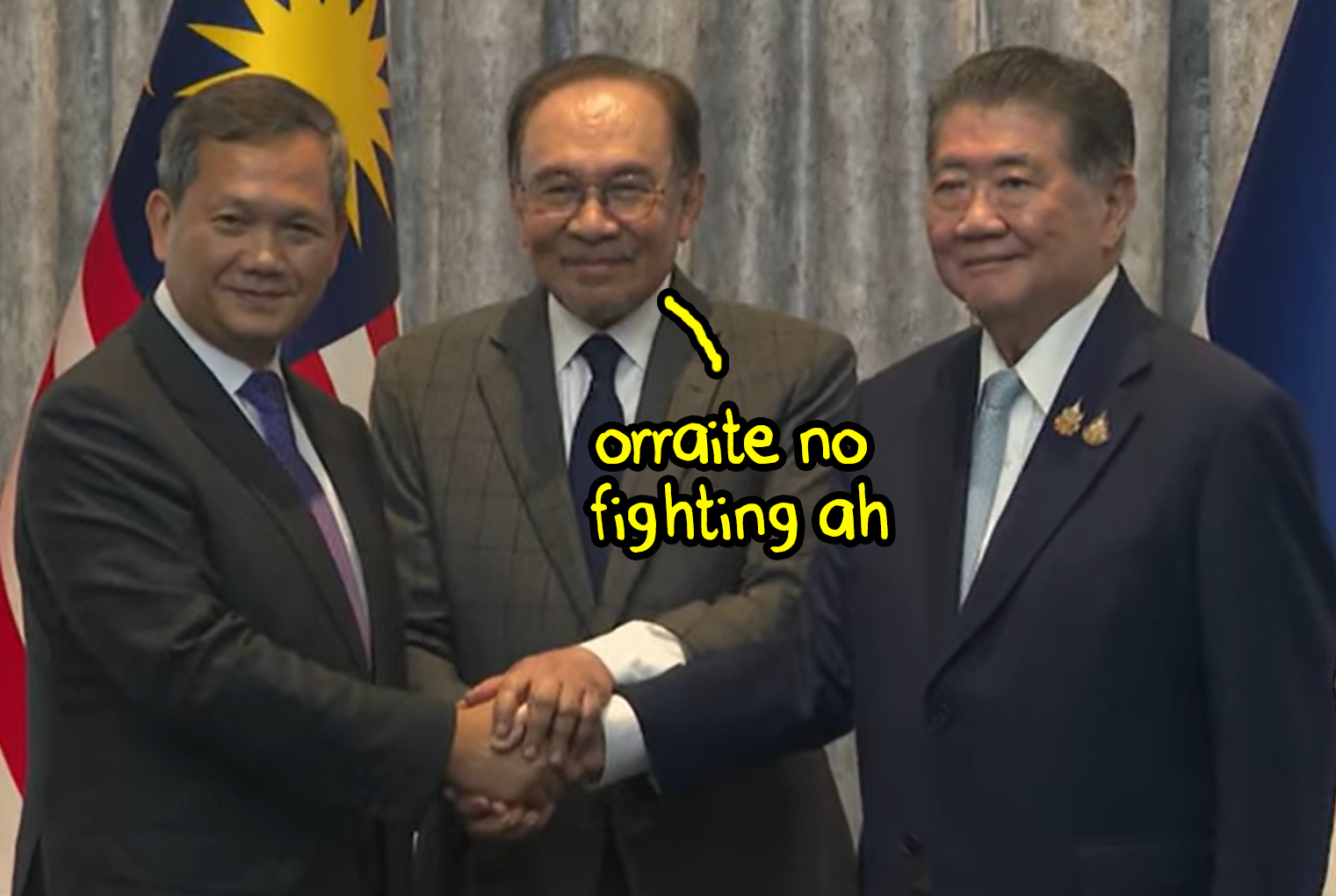
Less than 24 hours after the ceasefire was announced, Thailand accused Cambodia of breaking it by opening fire. Cambodia said it was Thailand who provoked first. The fighting hasn’t stopped since and Thailand now claims they’ve captured even more territory.
All of this brings us to one big question…
Just where are we headed right now?
Even though the war is playing out in Thailand and Cambodia, Malaysia has to work overtime to help keep it contained, if only to stop the big boys like China and the US from poking their noses in. Cos if they do, things could very well blow up faster than you can say proxy war. After all, Cambodia is a close buddy of China and the US is always looking for a chance to curb China’s influence.
If this blows up into a full on war, the fallout won’t be small. We could be looking at waves of refugees flooding into neighbouring countries, Malaysia included. We’re already juggling the Rohingya crisis, and this would just add more to the plate. Plus if other countries start dragging their allies into the fight, things could get messy real fast.
Right now on paper, sure, there’s a ceasefire. But on the ground it’s a totally different story. Thailand and Cambodia are still going at it like nothing’s changed. The ceasefire feels more like a just-for-show thing than a real peace deal.
No one really knows what’s going to happen next but the best we can do is hope Malaysia’s diplomatic game is strong enough to stop this from spiralling into a bigger war in Southeast Asia.
- 58Shares
- Facebook56
- LinkedIn1
- WhatsApp1