Global Supply Crisis, but why is Malaysia doing okay?
- 55Shares
- Facebook17
- Twitter7
- LinkedIn2
- Email3
- WhatsApp26
So a few months ago, a bunch of confused Malaysians posted on Threads asking a seemingly straight forward question that came up while shopping for groceries at the supermarket:
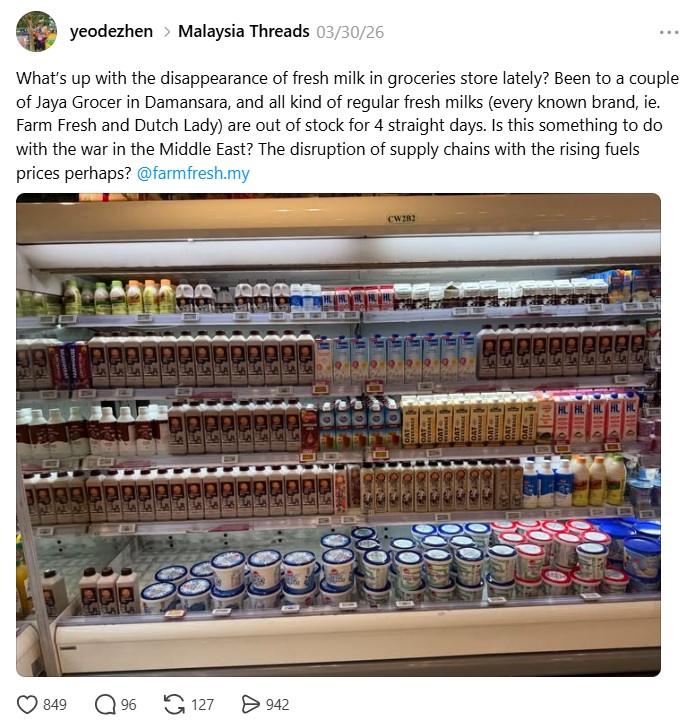
Naturally, the replies went full membawang mode. Some users started sharing their experience noticing similar milk shortages at their local stores, others shared how their stores were also seemingly lacking in other grocery items, while a few smart lil cookies immediately pointed to the ongoing war in the Middle East as the cause of all this.
Makes sense. After all, the actual dairy cows sitting on Malaysian farms were perfectly fine and healthy. So how on earth would a war thousands of miles away suddenly tiba-tiba delete a fresh bottle of milk from your neighborhood supermarket?
We DID say the question was seemingly straightforward (and emphasis on “seemingly”), because the answer is definitely a lot more topsy-turvy than we expected. Mostly because, we found out more than we expected to about what folks are now calling the grand, big, great ✨ GLOBAL SUPPLY CRISIS✨ which we’ll call KBG or Krisis Bekalan Global for short… partly because KBG sounds like a cool, cetak rompak Russian spy agency, but partly also because we skek get sued if we use the acronym GSC.
But in any case…
What even IS the KBG (Global Supply Crisis)? 🕵️
Usually when prices go up, our first instinct as Malaysians is to immediately cyberbully. Either cyberbully the gomen for not keeping prices under control, cyberbully the businesses that increased their prices, or cyberbully each other for eating too much. But while doing allat can definitely be kinda fun and even lowkey therapeutic, to really get why this happens you first need to understand… what even IS the Global Supply Crisis?
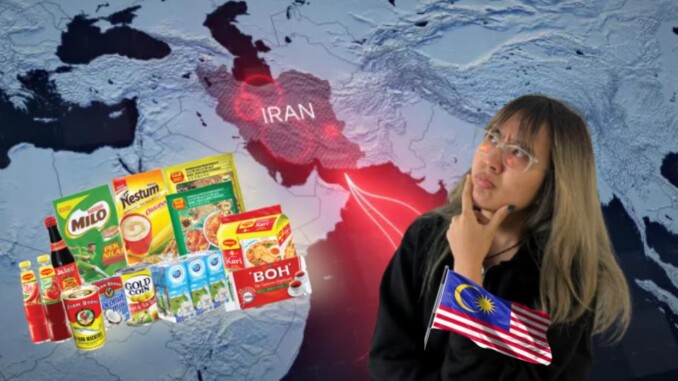
Really simply, the global supply crisis is what happens when massive, chaotic events around the world interrupt international trade, making it harder and way more expensive to move things from point A to point B. The ongoing war between Iran and the US which caused the Strait of Hormuz to close up AND the following global fuel shortage is one example of this.
But another example was when Russia went and invaded Ukraine, and as a result, chicken food became more expensive, and so there was suddenly not enough chicken. Deswai the gomen had to ban our chickens from getting exported so that we would have enough supply of our own to keep our ayam goreng addiction going.

Think of it like a stack of dominos. The tiles, not the pizza.
It doesn’t have to just be because of wars either. These supply crises can happen because of extreme weather patterns, unpredictable currency fluctuations, or even that thing the whole world collectively went through together a few years back and now it seems like no one remembers it anymore.
Now, to the average person just minding their own business in the snacks section of their neighborhood’s 99 Speedmart, these events might seem like abstract news stories they’d just swipe past on their news feed. But as the missing milk, fuel shortage, and chicken ban proved, these global events have very real, very deep consequences that can be felt all the way down to the very last cent of that packet of potato chips you just picked up off the shelf at the supermarket. For example:
- The Fertilizer Domino 🧪: When a war in an oil-producing country breaks out, this drives up the cost of natural gas. Because natural gas is a raw ingredient in agricultural fertilizers, when natural gas prices go up, so do fertilizer prices, and suddenly, a farmer in Cameron Highlands needs to pay significantly more to keep their sayur growing.
- The Animal Food Domino 🐮: Because Malaysia imports a significant portion of our animal food (like corn or soy), if a global pandemic or weather event suddenly prevents those things from getting to us, the cost of feeding our animals go up. And then the chicken farm tauke needs to pay more to feed his chickens, meaning they’ll then have to charge customers more to buy their chickens.
- The Logistics Domino 🚢: Even if the fuel or food can still be produced or farmed with no problem, it would still need to travel to get from where it is to where we are. So if the fler bringing us our food suddenly had to take the long, scenic route around because their usual route through the Strait of Hormuz is closed, their toll and fuel charges would also probably go up, causing our final bill at the end to also go all the way up.
Now we’re not saying there aren’t sellers and business people taking advantage of the situation to profit by bumping their prices up. But at the same time, given everything that’s going on, things aren’t totally the fault of traders being greedy. Which actually brings us to an interesting question: if the whole KBG thing is a result of multiple raging Avengers: Endgame-level dumpster fire disasters, why hasn’t Malaysia completely collapsed into a post-apocalyptic wasteland? And the answer is…
Because we’ve actually been actively handling the situation this whole time 😎

Now believe it or not, despite there being milk and bread shortages here and there, the fact that most of us can still walk into our local pasar malam or hypermarket and comfortably buy most of the stuff we want is actually not just because of good luck.
Instead, according to National Economic Action Council advisor Tan Sri Hassan Marican, our current market stability is actually the hard-earned result of early, proactive steps taken by the gomen designed to shield us from the worst of the global fallout.
“One reason major disruptions to daily life have so far been avoided despite continued global pressures is because the Government has been working actively to reduce the impact on rakyat and maintain stability.” – Tan Sri Hassan Marican, as quoted by Bernama.
Basically, if the gomen had not done what they’ve been doing to handle the crisis, we would probably be in a far worse place. Don’t believe us? Just look at our neighbors. The Philippines had to declare a state of emergency due to the “imminent danger posed upon the country’s energy supply.” Vietnam was pretty much hit the same. Thailand had to consider rationing fuel in case the energy crisis got even worse than it already has.
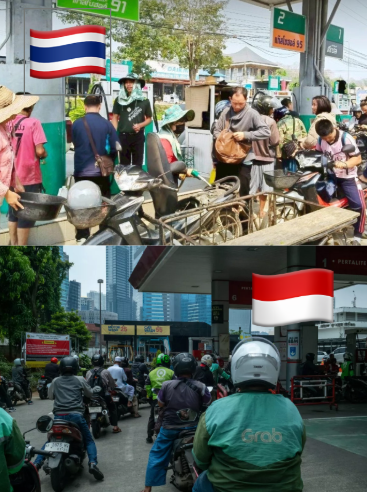
Meanwhile, alongside China, Malaysia has been marked as one of the more “resilient economies in Asia“, in contrast to most economies in the region that appear vulnerable to the crisis. How did we achieve this? A few ways, including:
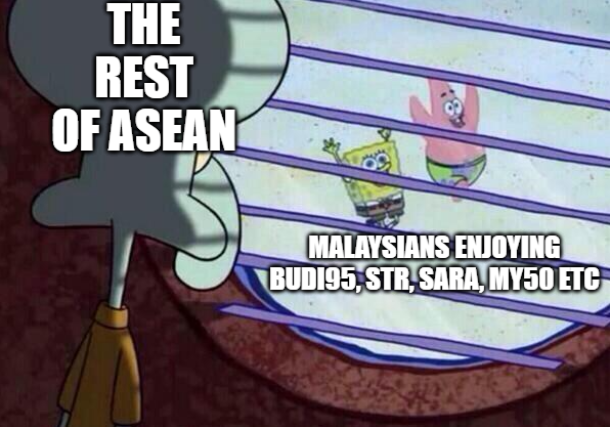
- Targeted subsidies: Instead of continuing giving blanket fuel discounts to just about everyone, the gomen scaling back subsidies and retargetting them instead via things like the Budi95 initiative helped keep the country’s finances stable against severe external factors.
- Direct assistance programmes: To support households, the gomen introduced programmes like the Sumbangan Tunai Rahmah (STR) and Sumbangan Asas Rahmah (SARA) to directly inject cash into the pockets of poorer families who’d be hit the hardest by global crises.
- Proactive measures: Apart from direct financial assistance, the gomen also introduced measures such as price control mechanisms, anti-profiteering enforcement, transport initiatives like the MY50 pass, fare discounts, and more to help ensure essential goods and expenses remain affordable and accessible.
That said, while the gomen is doing what it can, Tan Sri Hassan very bluntly pointed out that making it through this KBG will need more than just the gomen doing what’s necessary. It’ll also require us, regular Malaysians, doing so too:
“In this environment, every adjustment matters, whether it is optimising our travel, cutting down on electricity and fuel waste, building smarter logistics chains, maximising public transport, or simply being more deliberate with household spending… Every bit of efficiency helps shield our economy from these global pressures.” – Tan Sri Hassan Marican.
All of which are definitely relevant pieces of advice. But of course, that brings us to the final part…
Your survival guide to make it through a Global Supply Crisis intact
And so, like Tan Sri Hassan said, getting through all of this in one piece will require ALL of us to get together to make this work. And we mean ALL of us.

But how? First things first…
1. UNDERSTAND: Stop waiting for a “temporary price drop” 🛑
The absolutely most important first thing you need to do is… do your best to UNDERSTAND everything that’s going on. The good news is, the fact that you’re reading this article and made it all the way down here is definitely a sign of you being able to do this so… give yourself a clap on the back. But the truth is, this is likely gonna be a prolonged global supply crisis and not just a temporary price increase that will blow over soon. Which means things will be unpredictable in the coming months, so just because things seem pretty stable for now, don’t just assume the danger has passed. Instead, realize it’s because there are folks hard at work behind the scenes managing things for us, so we should stay locked in!
2. PREPARE: Move from week-to-week to more long-term planning 📅
Assuming the world is wonky for a while longer (I mean, it’s been wonky since 2020, but who’s counting?), expect global food supply, energy costs, and asset prices to keep going up and down like the Eagle Mountain ride at Genting. WHICH MEANS moving away from short-term financial habits, sitting down with your household, looking at your recurring monthly expenses, plugging any leaks in your bank account, and mapping out strict, long-term budgets so that the next time a global shipping canal gets blocked, you don’t immediately goyang.
3. ADAPT: Getting aggressively efficient with our daily habits 🛒
This is the annoying, boring stuff we’ve heard our whole lives… but only because it works. For example:
- Energy efficiency: Be smart with your minyak, letrek, and water consumption. Switch to energy efficient appliances and plan your driving routes properly because
I don’t want to fight traffic with you on the roadwe’re all in this together. - Cut the waste: Throwing away food or over-purchasing means we waste our money AND also add extra strain on an already tight market. Instead, cook in batches, meal prep, and do mindful shopping so that
I don’t have to wait in line for too long at the supermarketall of us have what we need. - Spend prudently: Exercise discipline with non-essential expenses. Skip impulsive online purchases, look for local alternatives, and make smart consumption choices by using resources like the gomen’s PriceCatcher app to identify more affordable options when buying household items so I don’t have to fight you all during Shopee’s 8.8 sale day we’re able to weather this storm together.
Ultimately by ourselves, these changes might only make small differences to your lives. But together, if millions of us pull together as Malaysians to take these steps, as the saying goes, a bit a bit become big big. So if you want to stay ahead, ignore the social media membawang, and track real-time stats yourself, make sure to bookmark the official government monitoring dashboard here, or by following the National Economic Action Council on social media. Let’s do this together gais!
- 55Shares
- Facebook17
- Twitter7
- LinkedIn2
- Email3
- WhatsApp26