Is the kakak clearing your kopitiam table working illegally? We investigate

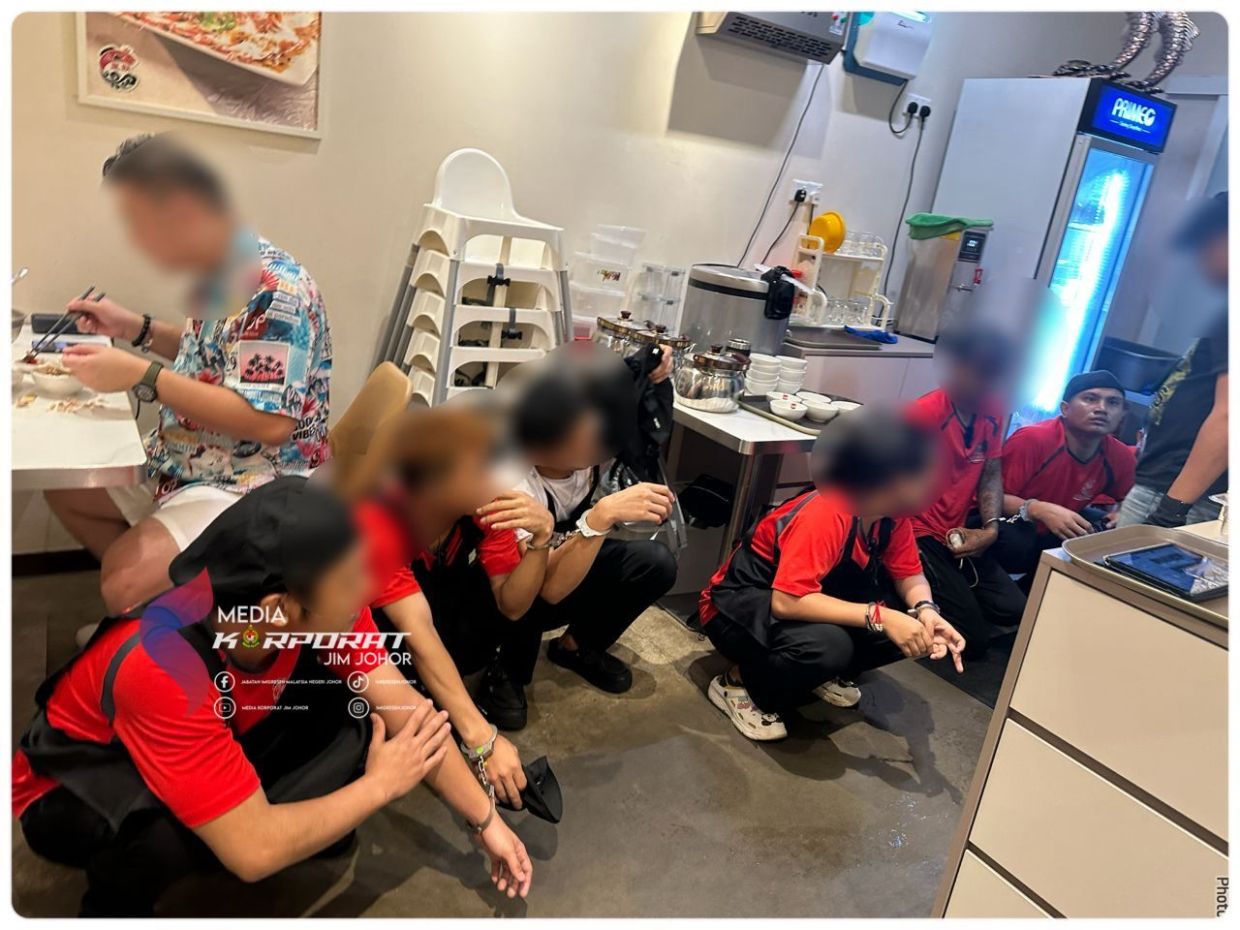
If you’ve ever lepaked at your neighbourhood kopitiam or hawker centre, you’ve probably seen Indonesian kakaks clearing tables and taking orders. Sometimes they’re even next to the uncle with the wok, helping to cook that plate of char kuey teow you love so much. Most of us don’t think twice about it cos we assume they’re just normal shop staff.
Except… there’s one small problem.
A lot of these kakaks aren’t actually supposed to be working there.
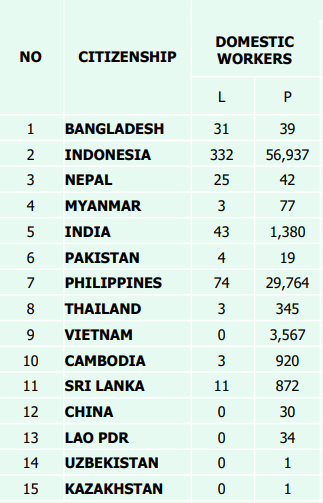
Across Malaysia, thousands of migrant women enter the country on a domestic worker permit. It technically only allow them to work in their employer’s home. But somewhere along the way, some end up at kopitiams, family run shops, cleaning companies and all sorts of other businesses.
One of those workers was Embun (not her real name). She flew in from Medan expecting to care for an elderly woman in northern Malaysia. But when she arrived, she discovered that employer didn’t even exist! Instead of working in a home, her daily routine started at 5 AM cleaning her agent’s house, after which she was shipped off to clean customer homes all across the town.
And unfortunately, the missing nenek was just the first part of the scam.
The RM1,700 monthly salary she was promised was suddenly slashed to RM1,200. Then it was squeezed down to just RM600 with the agent promising to pay the rest when she returned home. Even the small RM5 or RM10 tips given by customers also kena rampas. The worst part was how the agent kept everyone too afraid to complain, using violence to keep them in line.
“He beats people! Truly! He beats us! My friend wept back then when she was caught hiding just a few ringgit. We weren’t allowed to hold any money, not even RM 1. He threw all her clothes out, rummaged through everything and beat her just because she held some money. We didn’t steal it, customers gave it to us. And it wasn’t a lot, just small amounts, at most RM 10 or RM 20,” –Embun
Safe to say, Embun’s story left a pretty big impression on us. It also left us with a whole lotta questions. If someone could come to Malaysia for one job but end up doing something completely different, how often does this actually happen? And more importantly, who’s making it happen?
So we did what any kepoh journalist would do. We spoke to everyone we could from employers and recruitment agencies to migrant rights advocates and lawyers. What we found out was that scummy agents were just the tip of the iceberg. Behind them was a much bigger system that allowed these things to keep happening.
So to make sense of it all, let’s start with the absolute basics of what a domestic worker is actually allowed to do…
Legally speaking, a domestic worker permit is ONLY for your house
Now, we know some of you might be looking at Embun’s situation and wondering what the big deal is. After all, she wasn’t forced to serve coffee at a kopitiam or jaga the cashier at a mini mart. She was still sweeping floors and wiping down kitchens. Cleaning is cleaning, right?

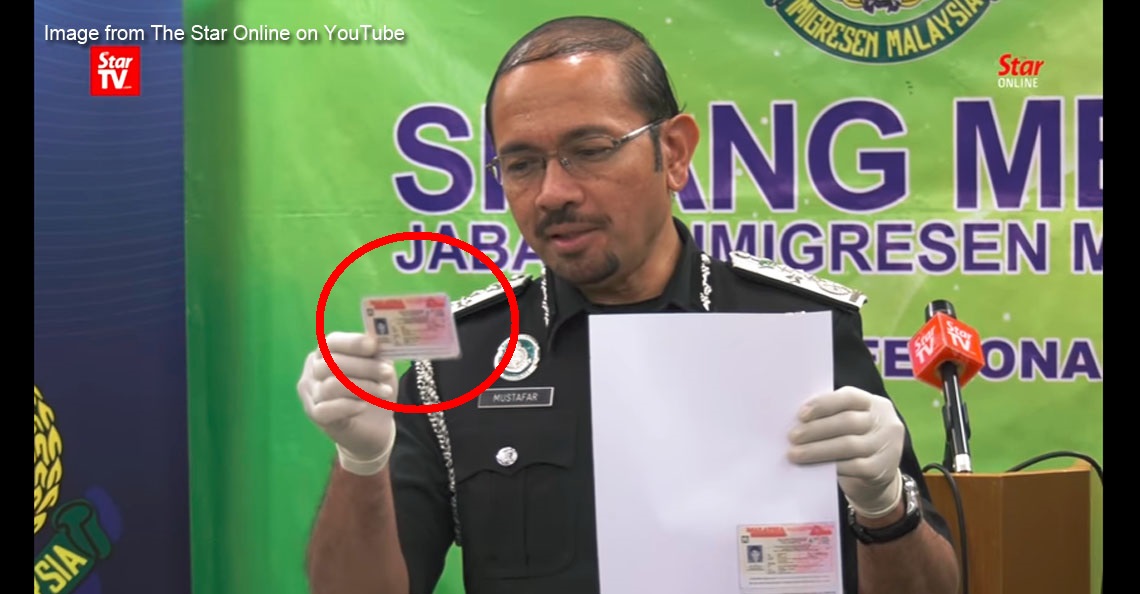
Well, not quite. What her agency pulled off was actually a straight up breach of Malaysia’s immigration laws. You see, migrant domestic workers enter the country on a Pass Lawatan Kerja Sementara (PLKS), which ties them to one employer and one residential address
Basically, their job is to work in that one household. So if you’re wondering whether you can…
- ask your domestic worker to help out at your family hawker stall,
- make them wait on tables and wash plates,
- put them behind the counter at your shop,
…the answer is a hard no.
As a matter of fact, the law is so strict that they can’t even clean your car in the porch, since it technically falls outside the realms of housework!
This is because Malaysia strictly categorises migrant workers by sector. If a business needs someone to clear tables or run a shop counter, employers need to apply for a completely separate permit under services. This is then further split into smaller categories like hotels, restaurants, island resorts, etc.
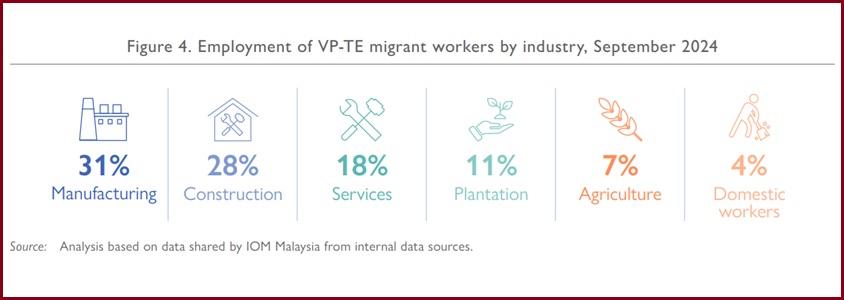
Ofc, the elephant in the room is money. Different sectors have different levy costs, which is an annual fee employers pay to the government for recruiting migrant workers. The important thing here is that domestic workers are the bargain option at around RM410. Now compare that to other sectors, where levies range from RM640 to RM1,850 💸💸.
And when the cheaper option also happens to be easier to get, it’s not surprising that some employers start blurring the lines. You don’t even have to look at shop or restaurant workers to see this happening. Just look at those freelance Indonesian cleaners who come to vacuum your house for a few hours on the weekend.

Technically, that arrangement isn’t allowed either. Workers hired under cleaning permits are meant to clean commercial spaces like offices and businesses, not private homes. As lawyer and advocate Sumitha Kishna explains, migrant workers can’t simply be moved between different types of work depending on what employers need.
“So basically, all these people, they’re taking the workers under general cleaning and then making them work house to house, which is not allowed. And also, some of them come on domestic worker permit, and then they go house to house to work. But Malaysia doesn’t allow part-time cleaners,” –Sumitha, lawyer and founder of Our Journey, an NGO that aids foreign domestic workers in legal matters
With the law being this black and white, you’d think people would be terrified of getting caught. Evidently, some employers are still willing to take the risk. So naturally, the question is…
What makes businesses so bold to use maid permits as a hiring backdoor?
The first reason is plain ol’ entitlement. Some employers feel that if they pay a monthly salary, they own the worker’s entire day. So if there’s nothing left to cook or mop at home, why not send them to jaga the shop counter?

But the bigger, systemic reason boils down to how mafan legal commercial hiring is for small businesses (SMEs).
Over the past few years, tighter foreign worker quotas have made it harder for SMEs to hire through the proper channels. And even if you manage to get past that mega loop-de-loop, some industries still have to deal with rules that can get very, verrrry specific.
According to Zenna Law, co-founder of recruitment agency Pinkcollar, an F&B business’s chances of getting foreign worker approval can come down to the type of food on its menu.
“It’s so difficult to get a quota, because right now, for the F&B sector, you can only apply if your menu is fully traditional food, like traditional Chinese or traditional Malay, and when you ask, like, ‘What does that mean?’ they’ll say that, ‘Oh, you just have to submit your menu, we’ll see if you qualify,'” –Zenna Law, the co-founder and CEO of Pinkcollar
And once these workers are already in the country, these arrangements become easy to miss because they’ve become so normal. Regular customers like you and this writer aren’t exactly going to look at a kakak wiping tables and wonder, Eh, is she actually allowed to work here?
On top of that, authorities don’t make a habit of popping in and out of neighbourhood hawker stalls asking to inspect workers’ papers. As Sumitha puts it, when there’s no proactive checking, employers have zero incentive to play by the rules.
“Enforcement is very poor, so this is how employers get away with it. So cases will only come to light when the worker complains, or maybe there’s a raid or whatever,” –Sumitha

And before you argue that some workers willingly take on these extra jobs… hold up first. There’s a huge difference between genuinely agreeing to something and just having no real choice.
When your employer holds your passport, controls your visa status and literally decides where you sleep at night, the power dynamic is already super senget. So even if a worker goes along with it, it doesn’t mean she actually wanted to.
In Embun’s case, after five months of beatings, pay cuts and her passport being locked away, she decided enough was enough. What followed was basically a Bond-style escape plan, except this wasn’t a movie and she wasn’t doing it for fun.
“The night we escaped [the agency], my friend secretly kept a SIM card. We ordered a Grab at midnight from the back kitchen door where there were no CCTV cameras. We told the Grab driver to turn off his phone’s location and drive us straight to [another state several hours away]. We were terrified the agency would catch us and beat us,” –Embun
Embun made it out, but escaping meant instantly becoming undocumented overnight. Don’t be so quick to judge her though! To understand why she felt that move was her only choice, we first need to look at how the system traps domestic workers in bad situations.
Fun fact! Malaysian labour laws EXCLUDE domestic workers from key protection
Turns out, not all workers are created equal under our laws.
While the rest of us can easily threaten to report our boss to HR when they ask us to reply emails on a Sunday, domestic workers don’t even have that privilege. Under the Employment Act 1995, basic ground rules on stuff like rest days, maximum working hours and overtime pay just skip over them completely.
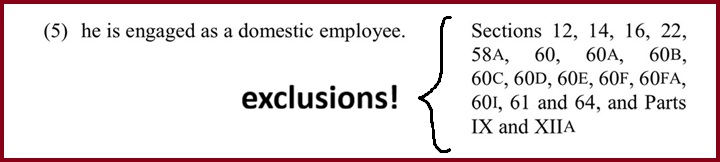
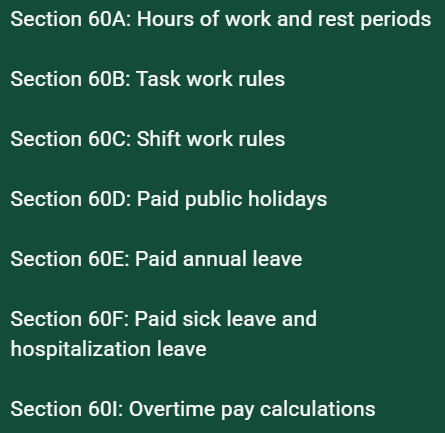
Add an undocumented status into that mix and a vulnerable worker becomes virtually defenseless.
Just to recap abit, a domestic worker’s legal right to breathe Malaysian air depends 100% on their one employer. As cruel as it sounds, even if a worker gets beaten, starved or hasn’t been paid for months, the exact second they step out that front door, they’re done for. Their employer can call immigration, cancel their work permit and turn them into an illegal immigrant overnight. From there, workers who wanna take action against their employers will get slapped with a massive Catch-22.
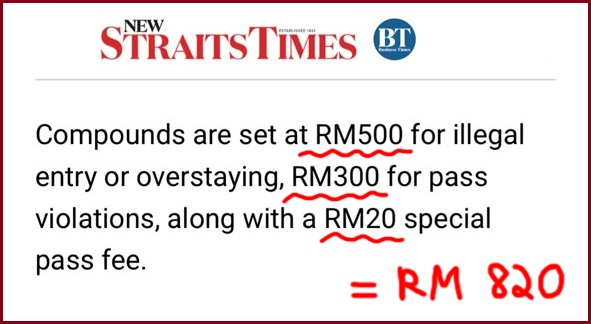
“The problem of domestic workers going to court is that as soon as the worker leaves the home or raises a complaint against the employer, the employer will cancel their work permit. And then the worker becomes undocumented. And then to file a case, they have to go and find a lawyer, file the case, and then with that, they will get a special pass, which is renewable every month at RM100. And while the special pass is on, they cannot work,” –Sumitha
So let’s get that straight. You get abused, you escape, you lose your job, you have to pay RM100 every month for a pass and you’re NOT allowed to work while waiting for the court case? Walao, how to survive like that?
Fixing this isn’t exactly high level rocket science either. Just next door in Singapore, when an employer cancels a permit, the government automatically gives the worker a temporary Special Pass so they have time to find a new boss or settle their claims safely.

Now, before you ask the very Malaysian question of, Then why don’t they just balik kampung? Why stick around and risk getting bullied by bad employers?
The truth is, Embun wanted to go home. She even tried getting this emergency travel document called SPLP, which would allow her a one-way trip back to Indonesia.
“I actually intended to go back after 3 years. I wanted to apply for an SPLP and pay the compound fine. But when I tried making an SPLP, I got scammed out of RM 2,000 by an agent! That traumatized me,” –Embun
So, stuck in Malaysia with an empty wallet and PTSD for scammy agents, her only choice was to keep hustling. Back in Indonesia, domestic work would earn her around RM600 a month. But in Malaysia, working as an independent cleaner could bring in over RM2,000. For Embun, that difference meant being able to support her children’s education, so she sucked it up and endured.
“My experiences… I’ve swallowed all the bitterness and sweetness. I’ve experienced being chased by the police and running into the jungle! Back then, there were rumors that immigration was conducting a raid. Someone alerted us early so we fled into the jungle first. We hid silently in the jungle until morning, and only returned once it was safe. That is the fate of undocumented workers,” –Embun
At this point, it would be easy to write Embun off as an unlucky person who met the wrong people. But as we read up more cases and spoke to more people, we noticed the same pattern kept cropping up.
Too many people profit, while domestic workers are left carrying almost all the risk
If we map out all the players in our story so far, we have domestic workers, employers, businesses, recruitment agencies, our government and the source countries sending workers over. Standing right at the front gate of this whole ecosystem are the recruitment agencies acting as primary middlemen.
Now, imagine what happens when that gateway turns into a trap.
When agencies misrepresent jobs, charge sky high fees or pull a vanishing act when trouble starts, workers are compromised before they even set foot in Malaysia. With so many tangled parties and zero accountability, the system makes it super easy for businesses and agents to profit while leaving the worker as the only one taking all the risk.
When Embun escaped her agency without legal papers, she had to jump between whatever informal jobs she could find. One of that was a short stint in a Chinese chicken rice shop in Subang Jaya. Her shift started at 6 AM wiping tables, prepping steamed chicken and serving drinks non-stop until 1 PM without a single break to even sit down. All this backbreaking labour was for a daily wage of RM50.
“Did the boss know I came to Malaysia as a [domestic worker]? Yes, he knew. But he still took me in and paid me less because he understood my situation,” –Embun
Shop owners know undocumented workers can’t exactly march into the Labour Department to lodge a complaint about unpaid wages or terrible conditions. What’s more, a worker who can’t safely report wage theft is infinitely easier to underpay, overwork and discard.
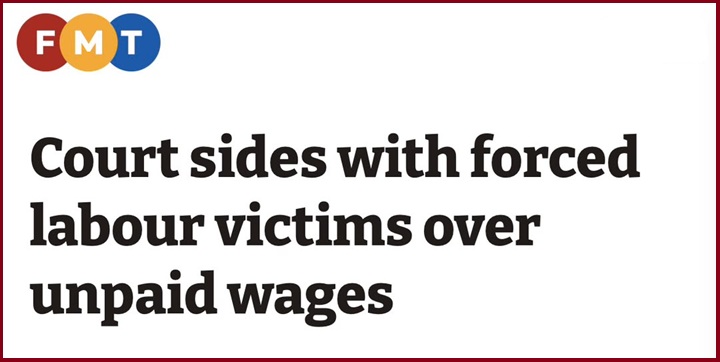
As Indonesian migrant rights advocate Wahyu Susilo points out, this massive appetite for cheap, paperless labour is why the undocumented cycle never stops.
“If there is fair legal enforcement of immigration, not only Indonesian migrant workers should be punished, but the [employers] are never punished, companies are never punished.
And this is what also causes undocumented problems to continue, because indeed demand for undocumented is higher than demand for documented… They need them quickly, and that can only be fulfilled if they are brought in massively, and bringing in migrant workers massively and documented is expensive, because companies have to pay levies,” –Wahyu
So you could say the issues facing domestic workers are not exactly hidden. A quick look through past headlines shows we’ve been reading about these exact same problems for years. So if everyone already knows these backdoor arrangements are happening in broad daylight, why is the system still crawling at a snail’s pace to fix it?
Turns out, legal reform is pretty hard when MPs employ maids too
For starters, there’s a glaring conflict of interest sitting right inside Parliament. According to Sumitha, getting lawmakers to pass better legal protections for domestic workers is an uphill battle because many MPs are employers of domestic workers themselves. So passing stricter labour rules simply doesn’t serve their personal interests.
“Advocacy for domestic workers is very, very difficult. You know why? Because the MPs themselves have domestic workers. So even when we speak to the MPs themselves, they don’t want to enhance any worker rights, or rather for domestic workers specifically, because then they will have to give the same rights to their own domestic worker,” –Sumitha

And the fixes activists and legal experts are asking for aren’t even that radical.
Top of the list is fixing the First Schedule of the Employment Act 1995 so domestic workers finally get basic rights. Experts are also pushing for a standalone Domestic Workers Act to draw hard boundaries around what employers can ask workers to do, alongside unlinking work permits from employers during court cases so abused workers don’t get turned into illegal immigrants the second they speak up.
Unsurprisingly, this unwillingness to change at the top feeds straight down into our daily Malaysian mindset. The main reason way too many people feel comfortable using their domestic workers in shops and businesses is cos we still view them as personal servants rather than actual employees with fixed job contracts.
At the end of the day, a worker shouldn’t need a law degree, an underground support network, and the sheer guts to pull off a midnight escape just to be treated like a human being.
Embun came to Malaysia hoping to give her kids a better future and eventually open a small business back home. Instead, she’s constantly wondering if today is the day she gets thrown in jail. And maybe that’s the cruelest part of the entire system. After everything Embun survived, whether a worker ends up safe or exploited still comes down to one completely random factor.
“It really depends on luck. If you get a good employer, your fate is good. If you get a bad employer, your fate is terrible,” –Embun
The project received support from the Thomson Reuters Foundation as part of its global work aiming to strengthen free, fair and informed societies. Any financial assistance or support provided to the journalist has no editorial influence. The content of this article belongs solely to the author and is not endorsed by or associated with the Thomson Reuters Foundation, Thomson Reuters, Reuters, nor any other affiliates.