
SPR is quietly redrawing Sarawak’s election map. Here’s why it matters.
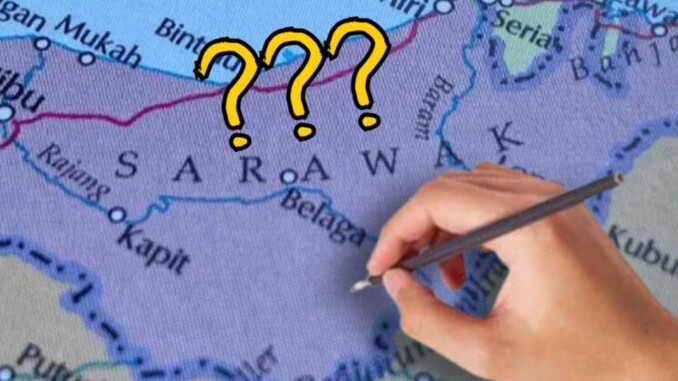
In case you missed it, Sarawak last year voted to increase the number of seats in their state legislature from 82 to 99. While the move is still pending Parliament for now, if or when it does happen, it’ll mean the entire electoral map for Sarawak will have to be redrawn.
Now, if that sounds like boring, typical kerja SPR that makes you want to close this article, rilek lu. Redrawing boundaries is actually one of THE most powerful moves in politics. Why? Because when you move those lines on a map, you are literally moving political weight. Basically, you get to decide which communities get broken up, which ones get lumped together, and exactly how many voters sit inside each seat.

But so what? Gomen officers surely know what to do, so no big deal. Well… not so fast. What these clean lines on paper don’t show you is the actual number of voters affected, and more importantly, how wildly uneven those numbers can get. One constituency might have 20,000 voters, while another has 120,000. That massive difference determines how much power your individual vote actually carries.
Essentially, when they redraw these lines, they are redefining how much your voice means. But before we explain that…
A quick recap on realine… redlinenation… realientation… REDELINEATION!
Ok, let’s just do a quick ELI5 (Explain Like I’m 5) on what redelineation actually is (eventho we’ve already written about it here, here and, here, among others). Basically, it’s when the Election Commission (SPR) redraws constituency boundaries to keep elections fair.
Think of it like choosing class monitors in school. In Class A, you have 50 students sharing one class monitor. In Class B, there are only 10 students, but they also get to choose one class monitor. Both classes technically have “one representative,” but the 10 students in Class B clearly have way more power because each of their individual votes carries way more weight.

It’s the exact same logic in adult elections. If one state seat has 70,000 voters and another has 10,000 voters, both still elect one ADUN—but the voters in that smaller seat have a much, much louder voice.
We saw this happen on a crazy scale back during GE14 in Peninsular Malaysia. Damansara had a whopping 150,439 voters, while Putrajaya had less than 16,000 voters. Yet, both elected only one MP each. That meant one Putrajaya voter had roughly nine times the voting power of one Damansara voter!
This kind of crazy weight imbalance is called malapportionment.
Now, our Federal Constitution does say constituencies should be “approximately equal” in voter numbers. But it still allows some flexibility because some rural areas are absolutely massive, remote, and incredibly hard for an elected representative to travel across and serve. Fine, that makes sense especially in a giant state like Sarawak. But when the gap is the size of the potholes in my taman rumah, “rural weightage” starts looking more and more like an excuse.
But wait… why are we talking about this right now?
So the thing is, SPR is memang olredi required to review things since Sarawak’s last redelineation was all the way back in 2015. This was long BEFORE the massive population booms in places like Kuching, Miri, and Sibu became this obvious.
Because of this, some MPs and civil society groups have already started to make some noise. Back in March 2026, Bandar Kuching MP Dr Kelvin Yii warned that redelineation must not be used as a sneaky tool to cushion political strongholds. He pointed out that while geographically massive and super remote areas genuinely deserve extra representation, the Constitution’s rural weightage rule shouldn’t create unfair disparities between urban and rural voters in Sarawak.
“While I acknowledge that the constitution provides for the ‘weightage of area’ in rural constituencies, it is not a blank cheque to over-represent all rural seats.” – YB Kelvin Yii.
By April 2026, DAP Sarawak chairman Chong Chieng Jen went full blunt mode. He flagged that some urban seats in Sarawak have exploded to around 70,000 voters, while certain rural seats have shrunk down to a mere 11,000!
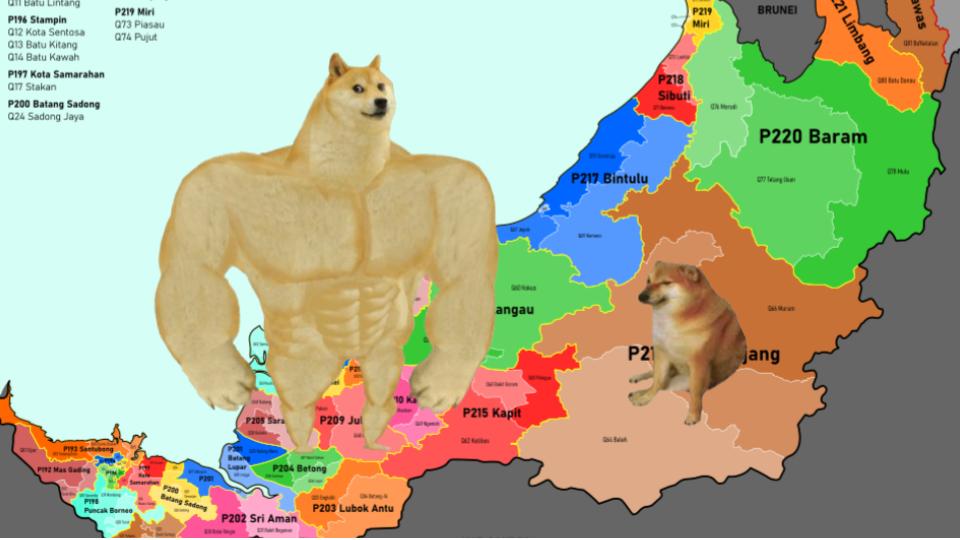
With that kind of disparity, a voter in a rural area carries significantly more power than one voter in an urban area, which completely undermines the basis of one person, one vote. So if SPR uses the 17 new seats to balance out this voter distribution, it would be a fantastic corrective exercise. Buuuut if the new map just creates more tiny pro-government seats while leaving urban areas overcrowded, then this redelineation exercise would just be an excuse to give ALL the power to the state gomen.
And boy, wouldn’t you know it…
The Mystery of the 98-Slide Leaked Proposal
Here is where things get a little uncomfortable. Usually, once SPR has its provisional recommendations ready, it has to
- Publish a notice
- Display the proposal publicly, and
- Give the rakyat a one-month window to object.
If at least 100 affected voters in an area lodge a formal complaint, SPR is LEGALLY required to hold a local inquiry. In short: voters are supposed to see the map before it becomes final.
But right now? The official status is… total silence. Draft proposal pun takde. Consultation stage details also dun have. Not even a rough outline of where these 17 new seats will go. In March 2026, Sarawak’s DUN Speaker Mohamad Asfia Awang Nasar even confirmed they had “no response yet from SPR.“
Buuuut, while the officials in this process are keeping totally mum, a highly detailed 98-slide document was leaked online!

Civil society groups like BERSIH, Tindak Malaysia, and Projek SAMA raised major alarm bells because this mystery document allegedly contained proposed constituency boundaries, exact voter sizes per seat, ethnic breakdowns, and even how the new seats should be allocated among GPS component parties (PBB, SUPP, PRS, PDP).
If accurate, this isn’t just your typical SPR planning. This would actually be like the referee straight up agreeing to help one team before the game even starts! Like… just take a look at these crazy patterns highlighted by the leak:
Case Study 1: Bandar Kuching vs Petra Jaya
According to the leaked slides, Bandar Kuching (approx. 109,000 voters) gets exactly zero new seats. Meanwhile, nearby Petra Jaya (approx. 114,000 voters)—which has a very similar voter population size—allegedly gets two brand new seats. Why are some crowded areas being split up while others remain packed like sardines?
Case Study 2: Senadin vs Gedong
Senadin has around 73,430 voters, while Gedong sits at only about 10,380. Both elect exactly one ADUN. This means one ADUN represents seven times more human beings than the other!
Case Study 3: The Urban vs Rural Great Wall
DAP Sarawak pointed out that the five smallest rural seats (Gedong, Sadong Jaya, Pelagus, Kalaka, and Simunjan) all sit under a cozy 15,000 voters per seat. On the flip side, the five LARGEST urban seats, Senadin, Dudong, Tupong, Pelawan, and Kota Sentosa, are bursting with up to 73,000 voters.
Again, Sarawak is huge, so rural weightage makes sense. But if small seats keep multiplying while dense urban seats stay bloated, that means voters in smaller seats have a stronger weight compared to urban voters in those bloated seats.
GPS says: “Relak jap, don’t jump to conclusions”

Unsurprisingly, government leaders have pushed back against the viral panic. PBB Information Chief, Datuk Seri Abdul Karim Rahman Hamzah, totally dismissed the rumours that the seats had been allocated among the parties within GPS.
“Some people are saying that out of the 17 seats, 10 have been guaranteed for PBB, three for SUPP and so on. There are no seats yet. I don’t even know where the seats are.” – Datuk Seri Abdul Karim Rahman Hamzah.
Basically, he rejected claims that the 17 seats had already been divvied up behind closed doors (with rumors claiming PBB would get 10, SUPP 3, PRS 3, and PDP 1) and argued that the Election Commission has the sole authority here, while suggesting that “mischievous cyber troopers” were just trying to cause chaos and make GPS component parties fight among themselves.
On the surface, that sounds fair. GPS legally cannot create constituencies by itself; that is SPR’s job. But the real question then should be… Was GPS already laying the political groundwork even before SPR opened its mouth? Because back in 2024, Premier Abang Johari openly confirmed that PBB had formed a special committee specifically to study redelineation and submit their own recommendations straight to SPR. By 2025, various GPS component leaders were already publicly proposing specific locations where they wanted new seats to exist.
So when leaders say “we don’t know where the seats are,” do they genuinely not know, or do they just mean the final official announcement hasn’t dropped yet? There’s a big difference. Because even if the leaked 98-slide document turns out to be fake, the public shouldn’t be left completely in the dark while political parties are actively shaping expectations in the background. Which brings us to…
“Don’t worry, rakyat can object”… or can we?
Yes, on paper, there is a formal objection process. If you can gather 100 registered voters in an affected area, you can submit a complaint and force SPR to hold a local inquiry. But let’s do a quick reality check on how effective that actually is:
- The Massive Awareness Gap: Most normal citizens have absolutely no idea this objection process even exists.
- The Cruel 30-Day Timer: The window to submit objections typically lasts for only 30 days once the map is displayed.
- The Logistical Nightmare: Mobilizing 100 valid registered voters, verifying their details, and preparing a solid legal submission in 30 days is an incredibly tough uphill battle.
- The “Too Little, Too Late” Problem: By the time the map is published for public view, the core design is already structurally locked in.
Civil society groups like ROSE (Rise of Sarawak Efforts) have repeatedly highlighted that public participation happens way too late in the game. Objections might tweak a tiny line here or there, but they rarely change the overall logic of the map.
And unfortunately, what happens in Sarawak won’t stay in Sarawak. The Election Commission has already indicated that massive redelineation exercises are scheduled for the rest of Malaysia relatively soon. Sarawak is just the very first guinea pig test. If we accept limited transparency, heavy early-stage political involvement, and systemic voter imbalance here, it becomes a hundred times easier for them to do the same thing again everywhere else.
At the end of the day, you don’t actually need to change how people vote to change the outcome of an election. You just need to change how those votes are grouped together on a map. And by the time most people realize that… the map is already fixed.
So to Sarawakians, keep your eyes peeled, and to everyone else, keep your eyes on Sarawak. Because when that official SPR notice finally drops, we need to make sure we’re looking veeeeeery closely at the lines they drew.